Product Buildup in Curly Hair: How to Clarify Safely
Product buildup in curly hair leaves curls limp, dull and dry. Learn the signs, how often to clarify, what to use and what to do after. Reset your curls!

In this article
- What Product Buildup in Curly Hair Really Is
- 7 Signs of Product Buildup in Curly Hair
- How Often Should You Clarify Curly Hair?
- How to Clarify Curly Hair Safely, Step by Step
- What to Use for Clarifying (and What to Skip)
- What to Do After You Clarify
- Buildup Myths Worth Dropping
- Troubleshooting: If Your Curls Still Feel Off
- Your Next Step
Your curls used to bounce. Now they go limp by noon, look dull and stay dry no matter how much conditioner and gel you stack on. That mix is the classic sign of product buildup in curly hair, and one well-planned wash day usually resets it. Here are the signs to check, how often to clarify, what to use (and what to skip) and how to bring moisture back afterward.
Key takeaways
- Buildup is a coating of stylers, oils, conditioner residue and minerals that your regular shampoo is not removing.
- Common signs: curls that feel heavy, limp or dull, dryness that conditioner will not fix, and gel or cream that rolls into flakes.
- Most people clarify about once a month. Shorten the gap for heavy products or hard water, and stretch it for light routines.
- Use a clarifying shampoo, not baking soda or dish soap, and always follow with a deep conditioner.
- Afterward, use about half your usual product for the first wash and keep it off the first inch of your scalp.
What Product Buildup in Curly Hair Really Is
Buildup is the layer left behind when stylers, oils, conditioner, sweat, dry shampoo and minerals from your water pile up faster than your shampoo can remove them. It sticks to the outside of each strand and the scalp, and it blocks water and moisture from getting in.
Curly hair collects it for three reasons. You probably use more products than someone with straight hair, you wash less often, and the bends and coils of a strand give residue plenty of places to cling. Gentle cleansers and co-washes are built not to strip, so they can also leave heavier stylers behind.
Not every ingredient behaves the same way. Waxes, rich butters and silicones that do not dissolve in water tend to cling longest, while light water-based gels rinse out more easily.
Did you know?
The part of a hair strand you can see is made of dead, keratinized cells, so it cannot “breathe” or be suffocated. Buildup does not choke your hair. It coats it, which stops water, conditioner and styling product from reaching the strand.
7 Signs of Product Buildup in Curly Hair
Buildup is easy to confuse with plain dryness or damage, because the symptoms overlap. Use this checklist to tell the difference.

- Hair feels coated or heavy, even right after a wash.
- Curls go limp or will not clump, and definition disappears within hours.
- Hair looks dull, with little shine or movement.
- Dryness that conditioner will not fix. Product cannot soak in through the coating.
- Gel or cream pills. It rolls into little white flakes instead of spreading.
- Hair dries slowly and feels weighed down.
- Your scalp feels itchy or flaky. This can have other causes, so see the troubleshooting section below if it persists.
Nodded to three or more? Time to clarify. A useful clue is that buildup hair looks better right after a clarifying wash, while damaged hair does not.
Where it shows up depends on your pattern. Waves (2A-2C) and fine curls tend to show it as limp roots and lost volume. Thicker 3C-4C coils often show it as dryness, tangles and hair that seems to repel water and conditioner.
How Often Should You Clarify Curly Hair?
Most curly routines land around once a month, but your products and water matter more than your curl type. Start with the table, then adjust to what your hair tells you.
| Your routine | Clarify about every |
|---|---|
| Light products (leave-in and a little gel), shampoo weekly | 4-6 weeks |
| Gel and cream on most wash days | 3-4 weeks |
| Heavy butters, oils or waxes, or mostly co-washing | 2-3 weeks |
| Hard water at home | 2-4 weeks |
| After heavy dry shampoo, sunscreen or a swim | Once, right after |
If signs return within two weeks, shorten the gap. If your hair feels stiff, squeaky or very dry afterward, stretch it out. Clarifying more often than every two weeks is rarely needed.
How to Clarify Curly Hair Safely, Step by Step
Pick a wash day when you have 30 extra minutes, because the deep conditioner afterward is part of the process, not an optional extra.
- Wet your hair thoroughly with lukewarm water. Hot water can dry out and irritate your scalp.
- Apply clarifying shampoo to your scalp only. A quarter-size amount is plenty for most heads, and a half-dollar for long, thick hair.
- Massage with your fingertips for 1-2 minutes, never your nails. Let the suds run down the lengths and squeeze them through gently instead of scrubbing.
Rinsing is where most clarifying washes go wrong, so slow down for the next three steps.
- Rinse for longer than usual. Residue left behind is its own kind of buildup.
- Lather a second time only if hair still feels coated, and keep it to the roots.
- Condition right away. Work in a generous amount, detangle with your fingers or a wide-tooth comb, leave it for 3-5 minutes, then rinse.
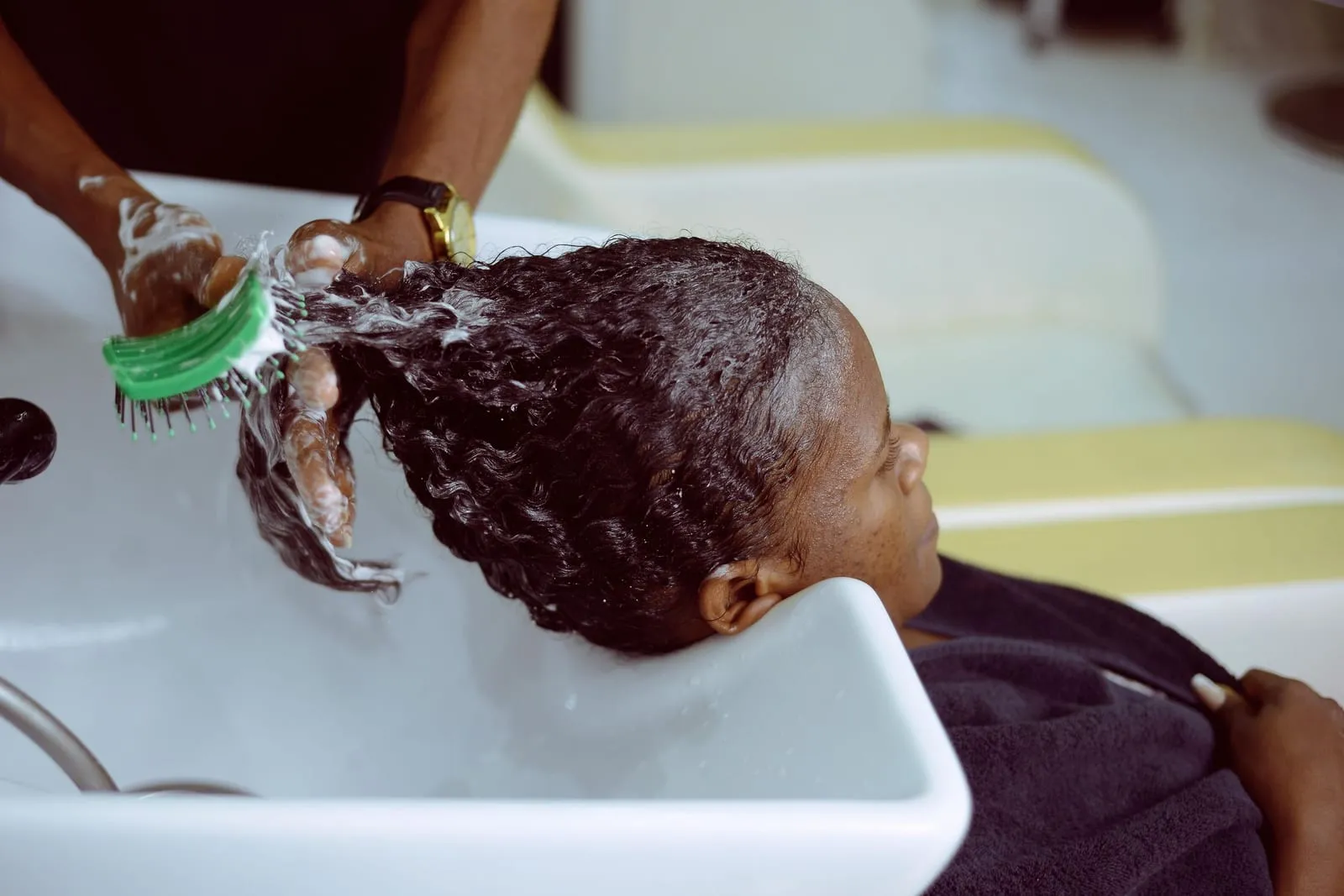
Done right, your hair should feel clean but slippery from the conditioner, not squeaky or stiff. One small prep step makes that much easier.
The conditioner shield
Before you shampoo, coat your ends with a thin layer of conditioner. The ends are the driest, oldest part of your hair, and the shield keeps the clarifier from stripping them while the suds still clean the roots and lengths.
Check your hair history before you start, too.
Colored or chemically treated hair
Clarifying shampoos can fade color faster, and some chemical treatments are sensitive to strong cleansers. If your hair is colored, relaxed or keratin-treated, ask your stylist which clarifier to use. If your scalp stings or burns, rinse it off and stop using the product.
What to Use for Clarifying (and What to Skip)
A clarifying shampoo is the safest first choice, because it is built to remove residue. Here is how the common options compare.
| Option | Verdict | Notes |
|---|---|---|
| Clarifying shampoo | Best first choice | Made to remove product and residue. Sulfate-free and sulfate-based versions both exist; follow the label and condition after |
| Chelating shampoo | Situational | Targets mineral deposits from hard water, so it solves a different problem than a clarifier |
| Apple cider vinegar rinse | Optional, with caution | Mildly acidic and evidence for removing buildup is limited. Start with 1 tablespoon per cup of water, skip it if your scalp is irritated, and never use it in place of shampoo |
| Baking soda | Skip | Alkaline, while hair and scalp are slightly acidic. It can roughen the cuticle and irritate skin |
| Dish soap | Skip | Made to cut grease off dishes, not to clean a scalp, and can dry and irritate it |
| Co-wash or cleansing conditioner | Not a clarifier | Great for gentle cleansing but not strong enough for heavy stylers |
Some curl communities swear by baking soda pastes and vinegar soaks. Our view is simple: natural does not mean gentle, and a product made for hair is the lower-risk way to get the same result. If you want to try vinegar anyway, our guide to the apple cider vinegar hair rinse covers dilution and who should skip it.
Did you know?
Hard water has high levels of dissolved calcium and magnesium, according to the U.S. Geological Survey. Those minerals can leave a film that makes curls feel rough and dull, and a clarifying shampoo is not always the right fix for them. That is where a chelating shampoo comes in.
What to Do After You Clarify
A clarifying wash removes product and some natural oils, so your hair will be thirsty. What you do next decides whether it feels soft or stiff.

- Deep condition for 10-20 minutes. Our guide to deep conditioning curly hair has timing by porosity.
- Restyle with about half your usual amounts. Clean hair absorbs product more evenly, so you need less. Our guide to defining curls without frizz walks through the technique.
- Expect a reset, not perfection. If curls feel a little dry or puffy for a day, that is normal. Add a light leave-in and wait.
- Go back to your routine with the tweaks below.
| Habit that causes buildup | Easy fix |
|---|---|
| Piling product on at the roots | Start at the ends and keep the first inch near the scalp light |
| Co-washing every time | Shampoo your scalp with a regular cleanser about once a week |
| Adding more product daily | Refresh with water first and add only a small amount |
| Layering products that do not mix | Pill-test them before you commit |
| Heavy butters on fine or low-porosity hair | Switch to lighter, water-based formulas |
The pill test
Rub a pea-size dab of your cream and your gel together on the back of your hand for 10 seconds. If they roll into little white crumbs, those two products do not layer well. Use them on different days, or swap one out.
Buildup Myths Worth Dropping
| Myth | Fact |
|---|---|
| Dry hair cannot have buildup | Buildup often makes hair feel drier, because moisture cannot get past the coating |
| Clarifying weekly keeps hair healthiest | Clarifiers clean more strongly than regular shampoo, so using them too often leaves hair dry |
| Homemade means gentler | Baking soda, undiluted vinegar and lemon juice can all irritate skin and roughen hair |
| Buildup only happens with heavy products | Even light gels and creams stack up over time when they are not fully washed out |
Troubleshooting: If Your Curls Still Feel Off
Hair Still Feels Coated After Two Washes
Do not keep repeating the clarifier. Wait a week, then try a different one, or a chelating shampoo if you have hard water. The problem may also be dryness or damage instead of buildup, so a stylist can help.
Hair Feels Stiff, Squeaky or Straw-Like
You probably over-clarified. Deep condition, use a leave-in and wait longer before the next clarifying wash.
Curls Are Frizzy or Undefined Afterward
The cuticle is temporarily rougher after a deep clean. Use a moisturizing leave-in and a slightly stronger gel. If you are not sure which styler to rebuild with, our guide to gel vs mousse vs cream compares them.
Your Scalp Is Itchy, Flaky or Sore
Buildup can irritate a scalp, but so can dandruff, dermatitis and product allergies. Read our scalp care guide, and see a dermatologist if symptoms last, or if you notice sudden shedding. The American Academy of Dermatology has more on hair and scalp care.
Your Next Step
This weekend, run the seven-sign check, pick a clarifying wash day and leave 30 extra minutes for a deep conditioner. Then set a reminder for four weeks from now and adjust the gap based on how your hair feels. When you restyle, our weekly curly hair routine shows how to keep the cycle simple, and our gel vs mousse vs cream guide helps you pick lighter layers.
Frequently Asked Questions
How often should I clarify curly hair?
What are the signs of product buildup in curly hair?
Is clarifying shampoo bad for curly hair?
Can I use baking soda or vinegar to remove buildup?
You might also like
More in Hair Care →
Gel vs Mousse vs Cream: Which Curl Product Should You Use?
Gel vs mousse vs cream: find the curl product that suits your pattern, from 2A waves to 4C coils, with a side-by-side chart and how to apply each. Pick yours!
How to Diffuse Curly Hair for Volume Without Frizz
Learn how to diffuse curly hair for big volume and no frizz: the right settings for 2A to 4C, the hover-and-cup method and fixes. Try it next wash day!

Co-Washing Curly Hair: How to Do It and Who It's For
Co-washing curly hair can leave curls soft, but it isn't for everyone. Learn how to do it, who it suits and when you still need shampoo. Read before you try!