Journaling for Beginners: How to Start (Plus 30 Prompts)
Journaling for beginners, made simple: try 5 easy styles, start in 5 minutes, keep the habit going and use 30 prompts for any kind of day. Grab a pen!

In this article
You bought a lovely notebook, wrote one page and then it sat in a drawer for six months. Sound familiar? Journaling for beginners does not require a perfect notebook, a free hour or good handwriting.
It takes five minutes, a pen and a few simple ideas, and this guide gives you all three: five easy styles, a no-pressure way to start tonight, a plan to keep going and 30 prompts for whatever kind of day you are having.
Key takeaways
- Journaling is a reflection habit, not a performance. There is no wrong way to do it.
- Five minutes is enough. Set a timer so the habit stays small.
- Pick one of five styles: free writing, gratitude, morning pages, intentions or an evening review.
- If you skip a day, just start again. One missed day does not undo a habit.
- Journaling is not therapy. If you feel overwhelmed for a long stretch, talk to a professional.
What Journaling Is (and What It Is Not)
A journal is a private place to get thoughts out of your head and onto a page. People use theirs to plan the week, let off steam, notice patterns in their mood or simply remember what a Tuesday felt like. Because nobody else will read it, you can be completely honest.
A habit, not a treatment
Writing can help you slow down and sort your thoughts, but it does not replace therapy or medical care. If low mood, anxiety or worry stays heavy or gets in the way of daily life, please talk to a doctor or a licensed mental health professional. In the US you can call or text 988 at any time, or visit 988lifeline.org.
Journaling for Beginners: 5 Styles to Try
You do not have to choose forever. Try each style for a few days and keep the one that feels easiest. That is the one you will actually do.

| Style | What you do | Time | Good for |
|---|---|---|---|
| Free writing | Write whatever comes, no editing | 5 min | Busy minds, venting |
| Gratitude | List 3 specific good things | 3 min | Ending the day on a positive note |
| Morning pages | Stream of consciousness, first thing | 10+ min | Clearing your head before the day |
| Intentions | One focus word and a top-3 list | 5 min | Planning and motivation |
| Evening review | Answer 3 short questions | 5 min | Winding down and learning from the day |
1. Free Writing
Set a timer for five minutes and write whatever comes into your head, even “I do not know what to write.” Do not fix spelling, do not cross anything out and do not reread. The goal is to empty your head, not to produce good sentences.
Did you know?
Psychologist James Pennebaker began studying expressive writing, meaning short sessions of writing about your thoughts and feelings, in the 1980s. Researchers have kept studying it ever since, so putting feelings into words is anything but a passing trend.
2. Gratitude Journaling
Write down three good things from today. Specific beats general: “the neighbor held the door while I juggled groceries” says more than “my neighbors.” Specific details make the moment easy to picture again later.
3. Morning Pages
Morning pages come from author Julia Cameron’s book The Artist’s Way (1992). The original idea is three pages of longhand writing first thing in the morning, with no rules about what goes on them. Beginners can start with one page or a ten-minute timer. If you like building a calm start to your day, pair this with our morning routine ideas.
4. Intentions and Top-3 Lists
Write one word for the day, such as “patient” or “focused,” then list your three priorities. Fans of the Bullet Journal method, created by designer Ryder Carroll, use short bullet points for exactly this. If you plan your week on Sundays, this style fits neatly into a self-care Sunday routine.
5. The Evening Review
Answer three questions: What went well? What was hard? What do I want to do tomorrow? Keep each answer to a sentence or two. Our evening routine ideas show where a short review fits into a wind-down.
Did you know?
Benjamin Franklin’s autobiography describes a daily schedule that began each morning with the question “What good shall I do this day?” and ended each evening with “What good have I done today?” He was asking himself intention and review questions more than 200 years ago.
How to Start Journaling in 5 Minutes
Starting is the hardest part, so make it almost too easy.
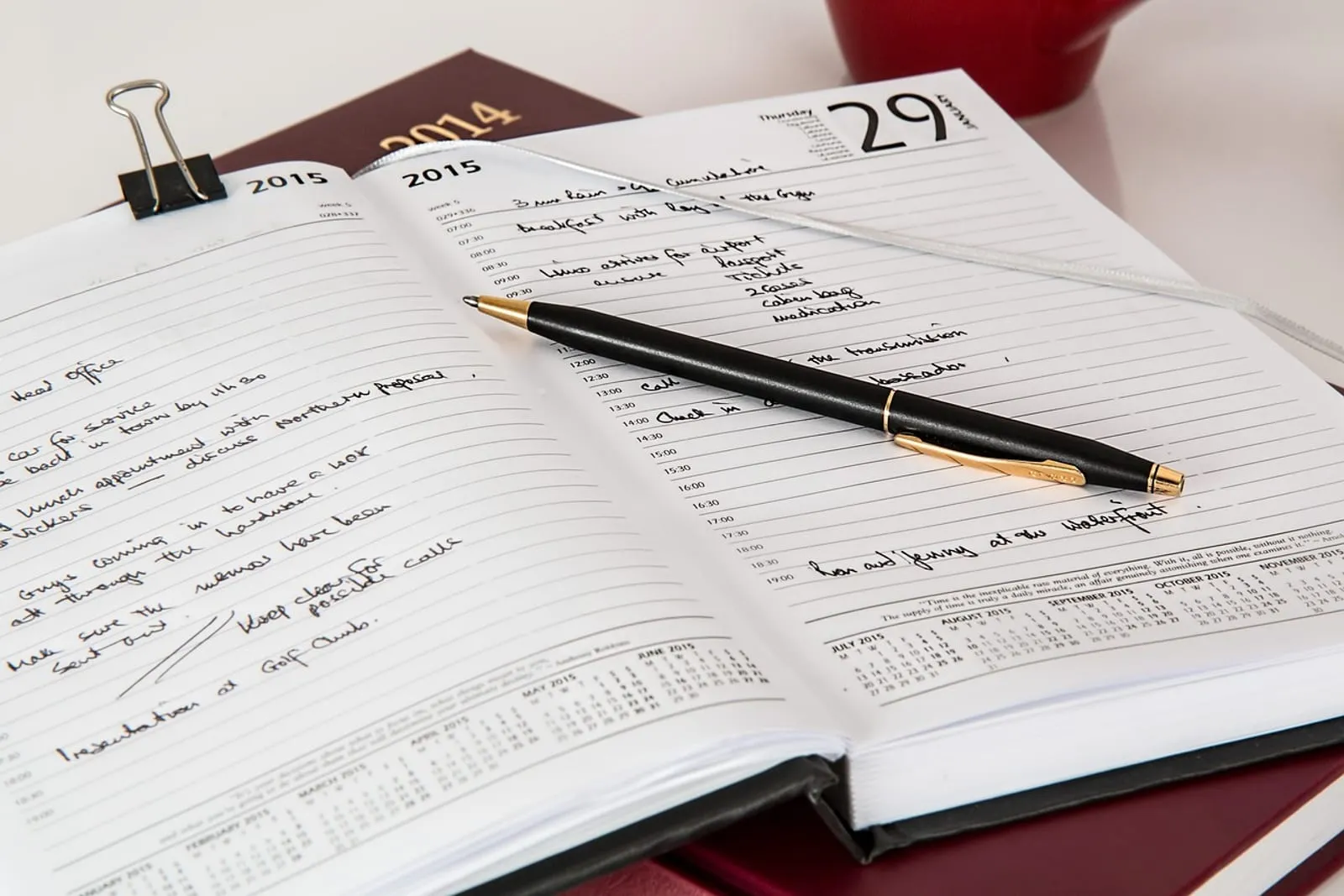
- Pick any notebook. A cheap spiral one works well because you will not worry about ruining it. A notes app works too.
- Choose a time you already have. Right after brushing your teeth, with morning coffee or once you are in bed.
- Set a five-minute timer. When it rings, you may stop.
- Start with a sentence starter. Try “Right now I feel…”, “Today I noticed…” or “I am thinking about…”.
- Write without editing. Bullets, doodles and half sentences all count.
- Date the page and close the notebook. That is the whole habit.
Quick hack
Attach journaling to something you already do every day, like the moment you press “start” on the coffee maker. Put the notebook and pen next to that spot tonight. Linking a new habit to an old one is often called habit stacking, and it works because you no longer have to remember to start.
30 Journaling Prompts for Every Mood
Stuck on a blank page? Pick one question below and write for five minutes. Skip any that do not fit your day.
Gratitude and Small Joys
- What is one small thing that made today easier than it could have been?
- Who helped me recently, and how could I thank them?
- What is something ordinary in my home that I would miss if it were gone?
- Which meal, drink or smell did I enjoy most this week?
- What is one place near me that I am glad to have?
Daily Check-In
- How am I feeling right now, in three words?
- What took the most energy today, and what gave me energy?
- What is rattling around in my head that I could write down and set aside?
- What is one thing I did today that I would do again, and one I would do differently?
- What do I need more of tomorrow: rest, movement, fresh air or company?
Goals and Intentions
- What would I like to feel good about by the end of this month?
- What is one tiny step I could take this week toward something I care about?
- What am I putting off, and what is the smallest version I could start in five minutes?
- What does a really good ordinary day look like for me, hour by hour?
- What would I like future me to thank me for?

Getting to Know Yourself
- What do I value most, and does my calendar show it?
- When did I last lose track of time, and what was I doing?
- What do I say yes to out of habit that I would rather say no to?
- What advice would I give a friend in my exact situation?
- Which three words do I want to describe this chapter of my life?
Stress and Hard Days
- What is weighing on me today, and which part of it is in my control?
- What is the kindest thing I can say to myself about today?
- What helped me get through the last hard stretch?
- Which people or places feel calm to me, and when can I see them next?
- What boundary would make this week easier?
Memories and Creativity
- What is a favorite childhood memory? What do I remember about the sounds and smells?
- How would I describe my perfect Saturday morning?
- What would I say in a letter to someone, if I never planned to send it?
- What skill would I love to learn, and what appeals to me about it?
- Finish this sentence five different ways: “I used to think… now I think…”
If a prompt stirs up feelings that are too heavy, stop and do something that steadies you, such as a walk, a glass of water or a call to a friend. Writing should feel manageable, not like a test of endurance.
Paper or Digital: Which Is Better?
The best journal is the one you will open. Both formats work, so pick based on how you live.

| Paper notebook | Notes app or document | |
|---|---|---|
| Speed | Slower, which some people enjoy | Fast, especially with voice dictation |
| Distractions | None | Notifications are one tap away |
| Searching | Hard to search later | Instant search |
| Privacy | Keep it in a drawer | Use a passcode or locked note |
| Risks | Can be lost or damaged | Can be deleted or unsynced |
Cannot decide? Use your phone for quick entries on busy days and a notebook for slower evenings.
How to Keep Journaling Without Burning Out
Most beginners quit because they aim too high. Keep the bar low and the habit sticks.
Did you know?
A 2009 study by researchers at University College London followed 96 volunteers who picked a new daily habit. It took an average of 66 days for the behavior to feel automatic, with a huge range from 18 to 254 days. Missing a single day did not seem to derail the process.
- Use the one-line rule. On bad days, one sentence counts as a full entry.
- Stop before you run dry. End mid-thought, and tomorrow’s start is easier.
- Make it visible. A notebook on your pillow is harder to forget than one in a drawer.
- Keep it private. If you worry about someone reading it, keep it locked in a drawer or use a passcode. Worry kills honesty.
Quick hack
Before you close the notebook, write the first line of tomorrow’s page, such as “Tomorrow I want to…” Tomorrow you skip the blank-page moment and simply finish the sentence.
If Journaling Is Not Working
| Problem | Try this |
|---|---|
| “I do not know what to write.” | Pick a prompt from the list or use the sentence starter “Right now I feel…” |
| “I feel silly or self-conscious.” | Remind yourself that nobody will read it. Write in bullets or shorthand |
| “I missed a week.” | Skip the catch-up. Write one line today and carry on |
| “Writing makes me ruminate.” | Switch to gratitude or a “next small step” prompt, or stop for the day |
| “It feels boring.” | Change the style, the time of day or the notebook |
| “I feel worse after writing.” | Take a break, talk with someone you trust and consider a mental health professional |
Your Next Step
Tonight, put a notebook and pen next to your bed or coffee maker. Tomorrow, set a five-minute timer and answer prompt number 6: how am I feeling right now, in three words? If you enjoy ritual and rhythm, you may also like our guide to new moon and full moon rituals, and for more ways to pamper yourself, explore these zodiac self-care ideas.
Frequently Asked Questions
How do I start journaling if I have never done it?
What should I write about in a journal?
How often should a beginner journal?
Is journaling a replacement for therapy?
You might also like
More in Self-Care →
Skincare Routine Order: What to Apply First, Step by Step
Skincare routine order made simple: what goes on first, morning and night, plus a 3-step minimum routine and a step-by-step table. Start tonight!

Natural Makeup Look: A 5-Minute Step-by-Step Tutorial
Learn a natural makeup look in 5 minutes: SPF, concealer, blush, brows, mascara and lip balm, plus shade-matching tips and a step table. Try it tomorrow!

How to Apply Sunscreen on Your Face the Right Way
Learn how to apply sunscreen on your face the right way: how much to use, when to put it on, how often to reapply and how to wear it under makeup.