Apple Cider Vinegar Hair Rinse: Does It Work?
Does an apple cider vinegar hair rinse really make hair shinier? See the science, the safe ratio, how often to rinse and who should skip it. Try it once!

In this article
Your hair looks dull, your scalp feels coated and the shampoo you love no longer seems to cut through the film. An apple cider vinegar hair rinse is one of the cheapest fixes people try, and it does something real, but not everything the internet claims. Here is what it can and cannot do, the safe dilution, and a simple routine you can finish in five minutes.
Key takeaways
- Always dilute: about 1 tablespoon of apple cider vinegar per cup of water to start.
- A rinse helps remove buildup and can leave hair smoother and shinier. It will not regrow hair or cure dandruff.
- Use it after shampoo, keep it away from your eyes, and rinse with cool water.
- Once a week is the maximum for most people; every 2 weeks is better for dry or color-treated hair.
- Stop if your scalp stings, itches or turns red, and see a dermatologist for lasting scalp problems.
Why People Use an Apple Cider Vinegar Hair Rinse
Shampoo, conditioner, styling products and hard water all leave a thin layer on hair over time. That layer makes strands look flat and feel heavy. Vinegar is mildly acidic, so a diluted rinse can help lift some of that residue and smooth the look of the hair surface.
Here is the simple chemistry behind the hype.
Did you know?
Standard vinegar is about 5% acetic acid. Your scalp and hair are naturally slightly acidic, around pH 4.5 to 5.5, while many shampoos land closer to neutral or higher. An acidic rinse brings the pH back down, which is why it can make hair feel smoother.
Most of the benefits are about how hair looks and feels today. Smoother cuticles reflect more light, so hair can look shinier, and less residue means less tangling for many people.
What It Can and Can’t Do
Before you pour vinegar on your head, sort the claims into fact and fiction.

| Myth | Fact |
|---|---|
| ACV makes hair grow faster | No good evidence. Hair grows about half an inch a month no matter what you rinse with. |
| It cures dandruff | It may help some flaking from buildup, but dandruff has several causes. See a dermatologist if it persists. |
| It repairs damaged ends | Damage cannot be reversed. A rinse can only make hair feel smoother for now. |
| Stronger is better | Undiluted vinegar can irritate the scalp and dry out hair. |
| It replaces shampoo | It is a rinse, not a cleanser. |
So the realistic promise is modest: less buildup, a bit more shine, and easier detangling.
Who Should Skip It (or Go Gentle)
- Dry, brittle or color-treated hair: acid can make already porous hair feel rougher. Use a weaker mix, less often.
- Sensitive or broken skin: do not apply to cuts, scabs or irritated patches.
- Very porous hair: if you are not sure where you land, take the 1-minute hair porosity quiz and read about low vs. high porosity hair first.
Patch test first
Mix a small amount and dab it on the inside of your elbow. If you see redness or itching after 24 hours, skip the rinse.
How to Make and Use an ACV Rinse
You need apple cider vinegar, water and a clean bottle. That’s it.
The Basic Recipe
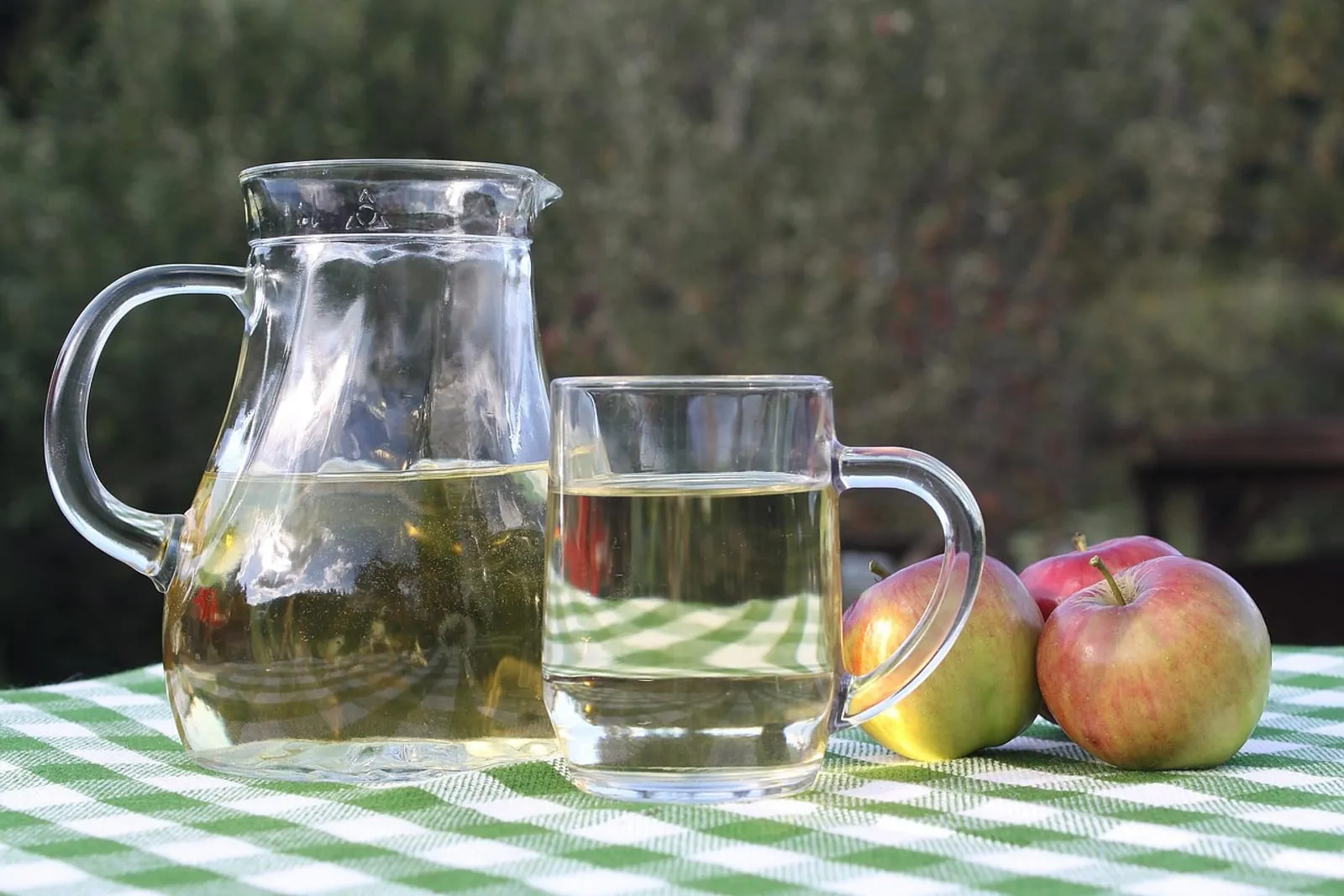
- Mix 1 tablespoon of apple cider vinegar with 1 cup of cool water in a squeeze bottle.
- Shampoo as usual and rinse well.
- Pour the mix slowly over your scalp and lengths, keeping your eyes closed.
- Massage lightly for about 30 seconds.
- Leave it on for 1 to 2 minutes, then rinse with cool water.
- Follow with conditioner on the lengths and ends if your hair needs it.
Strength Guide
| Hair type | Start with | How often |
|---|---|---|
| Fine or oily | 1 tablespoon per cup | Weekly |
| Normal | 1 tablespoon per cup | Every 1 to 2 weeks |
| Curly, coily or dry | 1 teaspoon to 1 tablespoon per cup | Every 2 weeks |
| Color-treated | 1 teaspoon per cup | Every 2 to 3 weeks |
Skip the stinging mess
Pour the mix into an old, clean shampoo bottle or a condiment squeeze bottle. You get better control, and the vinegar stays away from your face and eyes.
Pairing the Rinse With Your Routine
A rinse works best as an occasional reset, not a daily step. Think of it as a clarifying day.
Say you wash your hair on Sunday. You could do the rinse that day, skip heavy oils, then follow with a moisturizing conditioner. If your hair feels dry by midweek, our guide to deep conditioning curly hair shows how to add moisture back, and our frizzy hair fixes cover what to do when the surface still looks rough.
Did you know?
Apple cider vinegar is made in two steps: apple juice is fermented into hard cider, and then bacteria turn that alcohol into acetic acid. The cloudy strands in raw vinegar are called the “mother.”

Mix it fresh
Make a new batch each wash day instead of storing a diluted mix. Fresh water and vinegar are easy to measure, and you avoid keeping a bottle that has sat in a humid shower for weeks.
Troubleshooting: If the Rinse Isn’t Working
Your Hair Feels Dry or Rough
You are probably using too much or rinsing too often. Cut the strength to 1 teaspoon per cup, go to every other week and follow with a conditioner.
Your Scalp Stings or Itches
Stop using it and rinse with plain water. If the irritation continues, talk to a dermatologist, who can check for conditions the rinse might make worse. The American Academy of Dermatology has more on scalp and hair care.
The Smell Won’t Go Away
Rinse with plain cool water for an extra 30 seconds and use a weaker mix next time. The smell usually fades as hair dries.
No Visible Change
If your hair is not coated with buildup, you may not notice much. Try a gentle clarifying shampoo once a month instead, and keep a steady schedule like our weekly curly hair routine.
Rinse Day Checklist
Save this short list for your next wash day.
- Measure 1 tablespoon of vinegar into 1 cup of cool water. Never pour it straight from the bottle.
- Shampoo first, then rinse. The vinegar goes on after cleansing, not instead of it.
- Close your eyes and tilt your head back so the mix runs away from your face.
- Leave it for 1 to 2 minutes only. Longer does not mean better.
- Finish with cool water, then conditioner on the ends if your hair is dry.
- Note how your hair feels the next day. If it feels rough, use less vinegar next time.
Pay attention to your scalp as well as your lengths. Hair that feels smoother but a scalp that feels tight or itchy is a sign to dilute the mix further or stop altogether. Most people who keep a rinse in their routine use it as a once-in-a-while reset, not a weekly habit they never question, and that restraint is what keeps hair soft rather than dry.
Your Next Step
Try one rinse this week at the 1-tablespoon-per-cup ratio, then give your hair a day to see how it behaves. If it feels softer and shinier, keep it to once every week or two. For more shine without a rinse, read our guide to DIY hair masks from your kitchen next.
Frequently Asked Questions
How often should I use an apple cider vinegar hair rinse?
What is the right ratio of apple cider vinegar to water?
Does apple cider vinegar make hair grow faster?
Will the vinegar smell stay in my hair?
You might also like
More in Hair Care →
Best Hair Oils for Every Hair Type (and How to Use Them)
Find the best hair oils for your hair type, from fine and oily to thick and coily. Compare 7 oils, learn how much to use and avoid greasy hair. Start here!
DIY Hair Masks From Your Kitchen: 6 Easy Recipes
Make a DIY hair mask from your kitchen with 6 easy recipes for dry, frizzy, oily or dull hair. Get amounts, timing and a patch-test tip. Mix one tonight!

Fine Hair Volume: 10 Tricks That Really Work
Get fine hair volume that lasts with 10 simple tricks, from wash routine and cut to blow-dry tricks and product swaps. See which ones fit you. Try one today!