Makeup for Beginners: What You Actually Need to Start
Makeup for beginners made simple: the 8 things you actually need, what to skip, how to avoid overspending and how to keep your kit clean. Build yours today!
In this article
Walk into a beauty aisle and it can feel like you need forty products just to look “normal.” You don’t. Makeup for beginners comes down to a small kit of eight things, and this guide shows what to buy, what to skip for now and how to avoid overspending along the way.
Key takeaways
- Eight items cover a full everyday look: sunscreen and moisturizer, concealer, cream blush, a brow product, mascara, lip balm, one tool and a gentle remover.
- Skip primer, contour kits, big palettes and giant brush sets until you know you need them.
- Budget picks are usually fine for blush, mascara and lip balm. Spend more only where you want to.
- Buy one item at a time and test shades in daylight.
- Never share makeup, replace mascara about every three months and patch-test anything new.
Start With the Look, Not the Shopping List
Beginners often buy products first and look second, which is how drawers fill up with things nobody uses. Flip it: pick the simple look you want to wear most days, then buy only what that look needs.
A good first target is a fresh, everyday face that takes five minutes. The natural makeup look tutorial walks through it step by step, and the kit below is built around exactly those steps.
Makeup for Beginners: The 8-Item Starter Kit
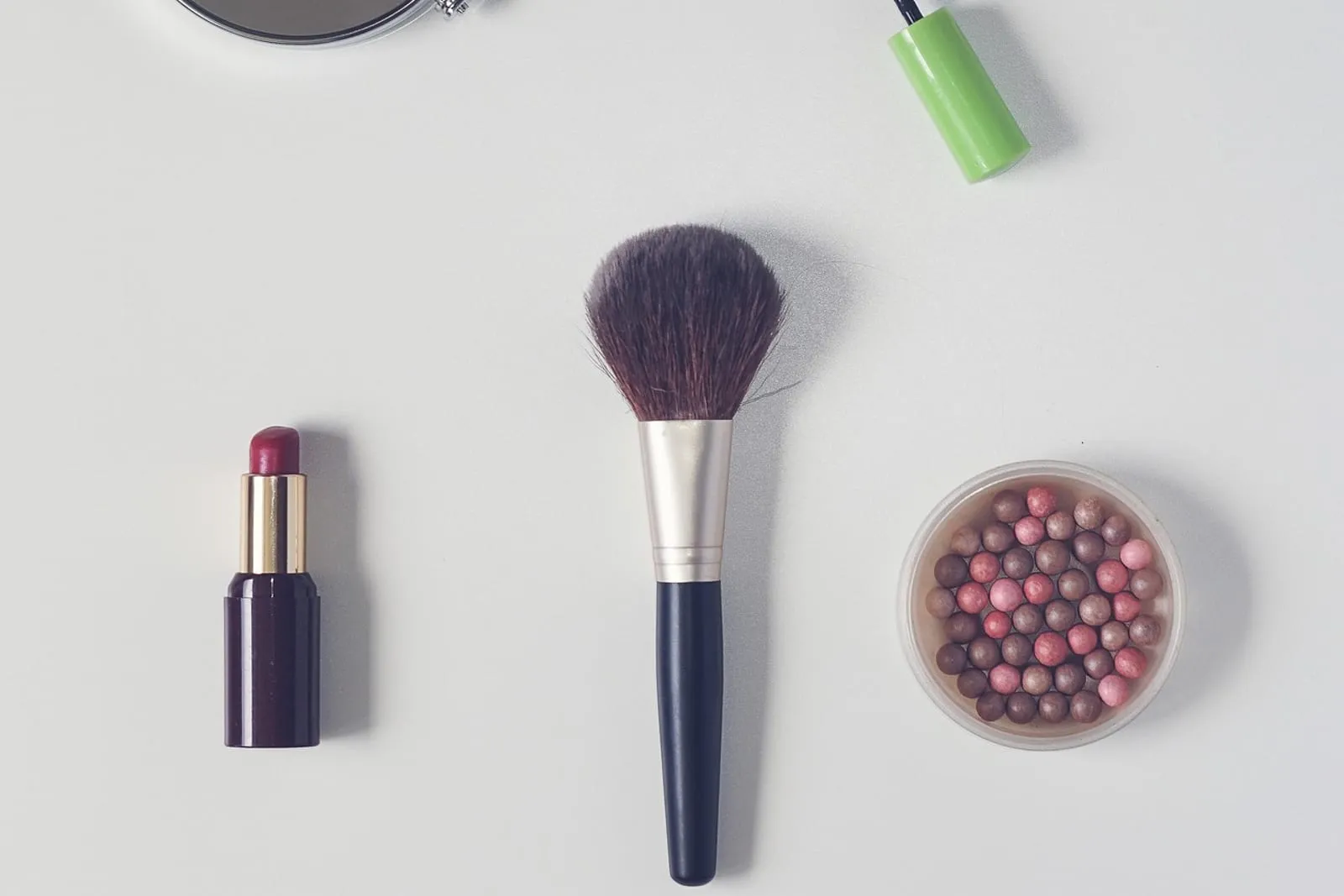
Here is the full list. Each item has a job, and each one has a cheap swap if you’d rather not buy it yet.
1. Moisturizer and sunscreen
This isn’t makeup, but it is the base that everything sits on. For sun protection, the American Academy of Dermatology (AAD) recommends a broad-spectrum, water-resistant sunscreen with an SPF of 30 or higher, reapplied about every two hours outdoors. Not sure of the order? See the skincare routine order guide.
2. Concealer
Choose one shade that matches your skin and a creamy or liquid formula that blends with your fingers. Use it only where you want to even things out, such as under the eyes or beside the nose. Many beginners find it replaces foundation, and how to apply foundation smoothly is there when you want more coverage.
3. Cream blush
One cream or liquid blush in a soft pink, peach or rose gives your face life. It blends with fingertips, needs no brush and looks like skin rather than powder. Tap it on the apples of your cheeks and blend upward.
4. A brow gel or pencil
Brows frame the face, and a tinted gel or a pencil close to your hair color is the fastest way to look polished. Add a spoolie, the small brush that looks like a mascara wand, to comb them into place.
5. Mascara
One tube in black or brown is enough. Start with a regular formula, because waterproof ones can be harder to remove. A budget tube works well here, since you will replace it every few months anyway.
Start with a mini kit
If eight items feels like a lot, begin with four: sunscreen, concealer, mascara and lip balm. Add blush and brows once those feel easy.
6. Lip balm or a tinted balm
A balm keeps lips comfortable and doubles as your easiest lip color. If you spend time outside, choose one that lists SPF on the label.
7. One soft brush or sponge
Your fingertips can handle cream products, so tools are a bonus. If you want one, a small damp sponge blends concealer and a single fluffy brush handles powder blush. Wash them regularly (more on that below).
8. A gentle way to remove it
Your usual cleanser removes most everyday makeup. Waterproof mascara may need an eye makeup remover. Taking makeup off before bed belongs in your evening routine.
The kit at a glance
| Item | Why you need it | Can replace it with |
|---|---|---|
| Moisturizer and sunscreen | Protects skin and gives makeup a smooth base | A moisturizer with SPF 30+ that is broad-spectrum |
| Concealer | Evens out spots and shadows | A sheer skin tint tapped on only where needed |
| Cream blush | Adds a healthy-looking flush | A tinted balm tapped on, if the label says it is meant for cheeks too |
| Brow gel or pencil | Frames the face | A clean spoolie to brush brows into shape |
| Mascara | Defines lashes | A lash curler for a softer lift |
| Lip balm | Comfort and a hint of color | A clear balm and a fingertip of tint |
| Brush or sponge | Blends product evenly | Clean fingertips |
| Gentle remover | Gets everything off before bed | Your regular cleanser, for non-waterproof products |
What You Can Skip (for Now)
Most of what fills a makeup counter is for specific looks, and you can add any of it later. Until you know you need it, skip:
- Primer and setting spray. Nice extras, but a good moisturizer and thin layers do the basics.
- Contour, bronzer and highlighter kits. These are for sculpting looks. A natural face doesn’t need them.
- Big eyeshadow palettes. Learn a simple eye with mascara first. Add one neutral palette if you want to play.
- False lashes and lash glue. Fun for occasions, not for week one.
- Giant brush sets. A 20-piece set usually means 15 brushes you never touch.
- Foundation. Concealer or a sheer skin tint covers the same ground for many people.
Marketing makes some myths sound like rules. Here is what holds up:
| Myth | Fact |
|---|---|
| You need a full face to look polished | A few well-placed products (skin, brows, lashes, lips) can look finished |
| A higher price means a better product | Price doesn’t tell you how a formula will feel or wear on your skin |
| You have to buy everything from one brand | Mixing is fine. Match shade and formula, not the logo |
| Mascara lasts until the tube is empty | Replace it about every three months, even if there is product left |
How to Spend Less on Makeup for Beginners
You can build this kit without picking favorite brands or chasing trends. Think in two broad tiers, budget and mid-range, and spend where the difference is noticeable.
| Item | Budget is usually fine | Mid-range may be worth it if |
|---|---|---|
| Sunscreen and moisturizer | You like how it feels and will wear it daily | You want a texture or finish you can’t find in budget lines |
| Concealer | You find a shade that matches | You need a wider shade range to match well |
| Blush and brow product | Yes | You want a very specific texture or shade |
| Mascara | Yes, since you replace it often | You have a formula you strongly prefer |
| Lip balm | Yes | You love a particular texture |
| Brush or sponge | Yes, if bristles are soft and don’t shed | You will care for a brush you love |
A few habits keep the total down. Buy one item at a time, so you learn what you use before you buy the next. Choose shops with easy returns. Avoid “complete” kits of 30 or 40 pieces, which pad the count with items you won’t use.
Did you know?
Under U.S. labeling rules, cosmetics sold to consumers must list their ingredients, in order from the largest amount to the smallest. That makes it easy to compare a budget product with a pricier one side by side.
Shade-matching is where beginners waste the most money. Test a swatch on your jawline, then step to a window to judge it in daylight.
Quick hack
Swatch two or three close shades on your jawline, walk to a window or the store entrance and take a quick selfie in daylight. Compare the photo later, once the store’s lighting isn’t tricking your eyes.
Hygiene: Keep Your Kit Safe
Makeup touches your eyes, lips and skin every day, so a few habits matter more than any product choice.
The FDA’s cosmetics safety information and dermatologists agree on the basics: don’t share, replace eye products regularly and keep everything clean.
| What | What to do |
|---|---|
| Mascara | Replace about every three months, or sooner if it smells odd or dries out |
| Brushes | Wash every week or two, or more often if you use cream products |
| Sponges | Wash often and replace when they tear or crumble |
| Cream and liquid products | Throw out anything that changes smell, color or texture |
| Everything | Wash your hands first and keep lids closed |
For the full how-to, see how to clean makeup brushes.
Quick hack
Write the date you open your mascara on the tube with a permanent marker, or set a phone reminder for three months later. Then you never have to guess.
Patch-test anything new: dab a small amount on your inner forearm or behind your ear and wait about 24 hours before using it on your face.
Did you know?
In the U.S., the FDA does not approve most cosmetic products or ingredients before they are sold. Color additives are the main exception. That is one more reason to patch-test and to stop using anything that irritates you.
The same care applies to what you share. Your makeup is personal, even with close friends.
Don’t share
Sharing makeup can pass germs between people, and eye products are the riskiest. If a product stings, burns or causes a rash, stop using it. See a dermatologist for irritation or breakouts that don’t settle, and a doctor for eye pain, redness or discharge.
If You’re Stuck
- It all looks too heavy. Use half the amount and blend with clean fingertips.
- You can’t find your shade. Try the jawline-and-window test, and keep the receipt.
- A new product irritates your skin. Stop using it, and see a dermatologist if it doesn’t calm down.
- You don’t know what to buy first. Start with the four-item mini kit above.
Your Next Step
This week, buy only the first four items, then try them in the natural makeup look tutorial. Add the rest slowly, and fit the five minutes into your day with these morning routine ideas.
Frequently Asked Questions
What makeup do I need as a complete beginner?
Do I need foundation as a beginner?
Is expensive makeup better for beginners?
How often should I replace my makeup?
You might also like
More in Self-Care →
Natural Makeup Look: A 5-Minute Step-by-Step Tutorial
Learn a natural makeup look in 5 minutes: SPF, concealer, blush, brows, mascara and lip balm, plus shade-matching tips and a step table. Try it tomorrow!
How to Apply Foundation Smoothly: 8 Easy Tips
Want to apply foundation without patches, streaks or caking? Try 8 easy tips on prep, amount, tools, shade and setting, plus a quick fix table. Try them today!

Journaling for Beginners: How to Start (Plus 30 Prompts)
Journaling for beginners, made simple: try 5 easy styles, start in 5 minutes, keep the habit going and use 30 prompts for any kind of day. Grab a pen!