How to Use Dry Shampoo the Right Way (Most People Get It Wrong)
Learn how to use dry shampoo so it soaks up oil without white residue, stiffness or buildup. Get the 6-step method, 7 common mistakes and how to pick one.

In this article
Dry shampoo is supposed to buy you an extra day. Instead many people end up with white roots, stiff strands or hair that feels dirtier than before. Knowing how to use dry shampoo comes down to four things: timing, distance, amount and what you do after you spray. This guide gives you a 6-step method, 7 mistakes to skip and a simple way to choose a formula for straight, fine or normal hair.
Key takeaways
- Dry shampoo absorbs oil. It does not clean your scalp, so it works best as a bridge between washes.
- Spray on completely dry hair, at the roots only, from about 8 to 10 inches away, in short bursts.
- Wait one to two minutes, massage with your fingertips, then brush it out.
- Spraying before bed, or before oil shows up, works better than waiting until the roots are greasy.
- A good rule of thumb is two to three days in a row, then a regular wash.
How Dry Shampoo Works (and What It Can’t Do)
Most dry shampoos use fine, absorbent powders, often starches such as rice, corn or tapioca, to soak up sebum at the roots. Aerosol versions mix the powder with a propellant so it comes out as a mist. When the oil is absorbed, the roots look lighter and the hair has a little more grip.
What it cannot do is clean. Sweat, dirt and styling product stay on the scalp and in the hair, which is why a regular wash still has to happen. Our guide to washing hair correctly covers that part.
Did you know?
Dusting starch onto hair is far older than aerosol cans. Britain introduced a tax on hair powder in 1795, a licence fee for wearing powdered hair, and starch is still a main ingredient in many dry shampoos today.
How to Use Dry Shampoo: The 6-Step Method
Follow these six steps in order. Most of the white residue and stiffness people complain about comes from skipping steps 3, 4 or 6.
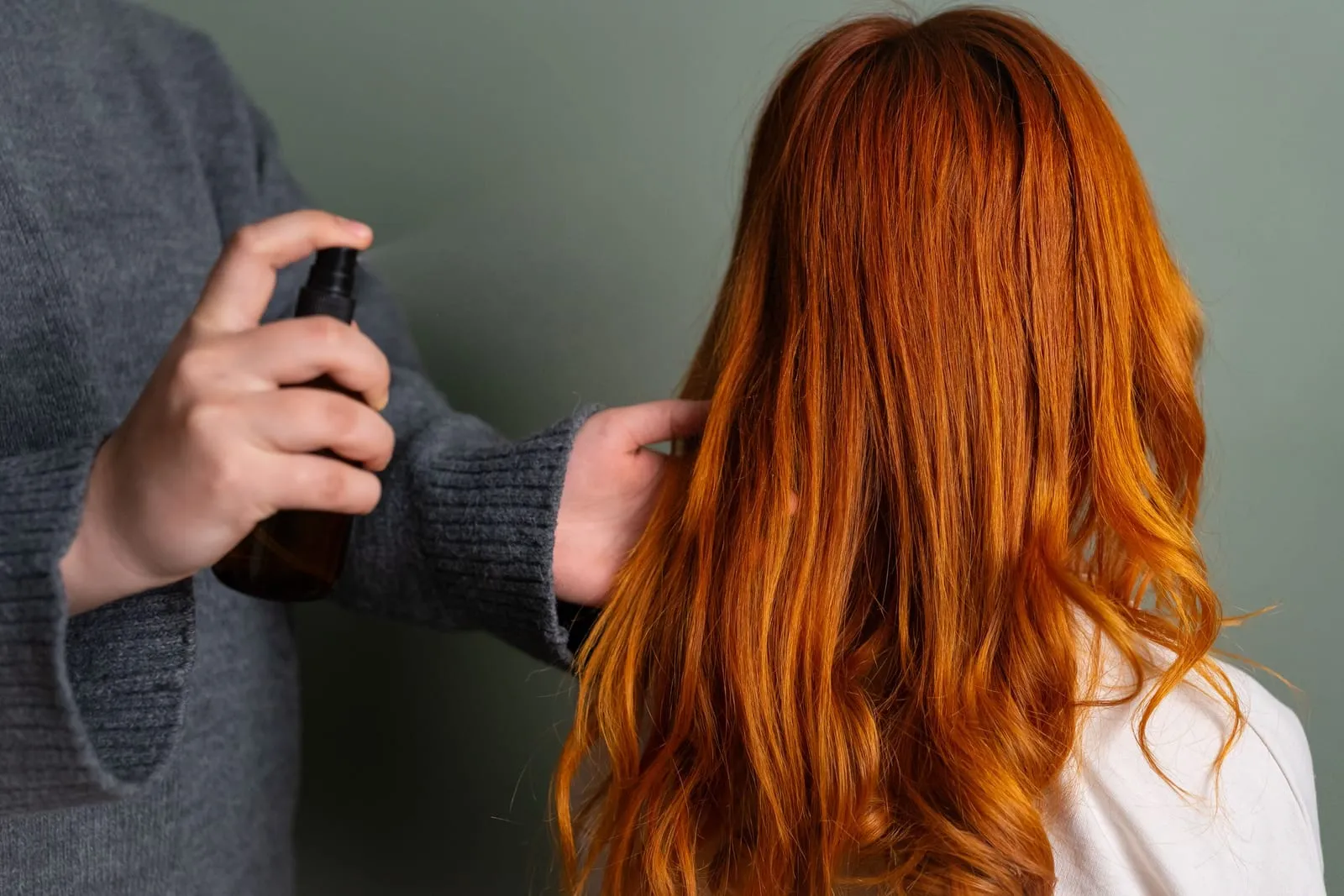
Step 1: Start With Dry, Brushed Hair
Use dry shampoo only on completely dry hair. On damp hair, the powder turns into paste and clumps. Brush through first so the spray can reach the roots instead of landing on tangles.
Step 2: Shake the Can Well
The powder settles at the bottom, so shake the can for about 10 seconds before every use. Check the label too, because some cans give a different distance or wait time.
Step 3: Part, Lift and Spray the Roots Only
Work in sections about an inch wide along your part, crown and hairline. Hold the can 8 to 10 inches from your head and spray in 1 to 2 second bursts, aimed at the roots rather than the lengths. Spraying too close causes white patches and a cold, clumpy feel.
Shield your face with a piece of paper
Hold a folded sheet of paper or your hand against your hairline as you spray. It keeps powder off your forehead and brows. Close your eyes, and spray in a ventilated room.
Step 4: Wait One to Two Minutes
Give the powder time to soak up the oil. If you brush it out right away, it has not had a chance to work, and the roots stay greasy.
Step 5: Massage It In
Press your fingertips against your scalp and rub in small circles, as if shampooing. This breaks up the powder and removes the white cast.
Step 6: Brush It Out
Brush from the roots down to pull the extra powder through the lengths and off the hair. Check your part in a mirror, ideally in daylight. If you still see powder, brush again.
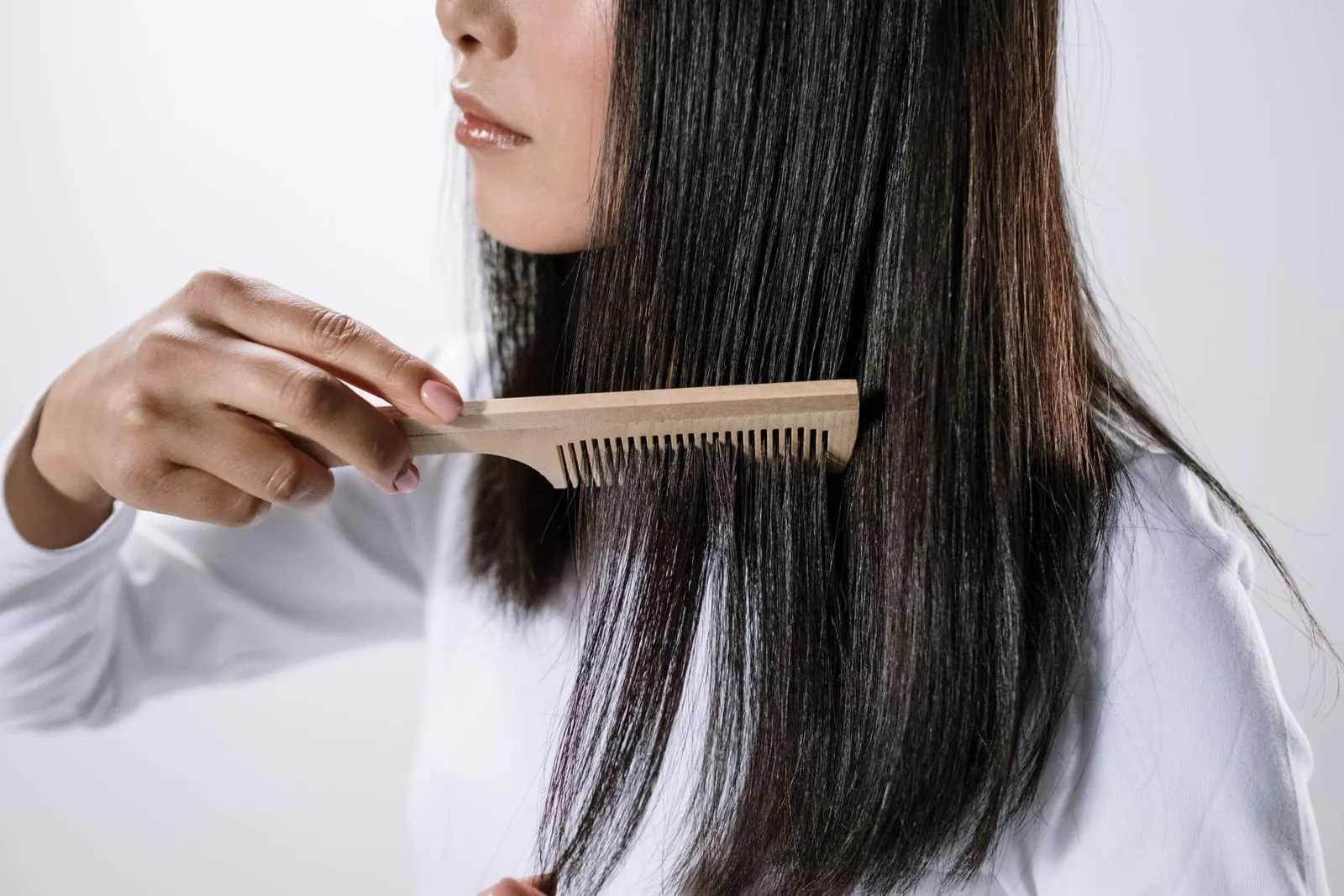
Planning to use a hot tool next? Brush thoroughly first, so no powder is left sitting on the hair when you style.
Finish with cool air
After brushing, flip your head over and use the blow-dryer on the cool setting for 20 seconds. It lifts the roots and blows loose powder out of the hair.
7 Dry Shampoo Mistakes (and the Fix for Each)
If your results are off, one of these is usually the reason.
| Mistake | What happens | The fix |
|---|---|---|
| Spraying too close | White patches, clumps, scalp feels cold | Hold the can 8 to 10 inches away |
| Spraying the lengths | Dry, stiff ends | Roots only |
| Using too much | Heavy, gritty hair with a white cast | Short bursts, then add more if needed |
| Not waiting | Powder sits on top and looks white | Wait one to two minutes |
| Skipping the brush-out | Dull, powdery hair | Massage, then brush every time |
| Using it on damp hair | Paste and clumps | Dry hair only |
| Using it day after day | Buildup, itchy scalp | Wash after two to three days |
Notice that most of the fixes are about technique, not the product. A cheap formula used correctly often beats an expensive one sprayed from two inches away.
When to Apply: Night Before or Morning?
Timing matters as much as technique. A light mist before bed gives the powder hours to absorb oil as it builds up, so you wake up with less to hide. Use this table to choose.

| Your situation | Do this |
|---|---|
| Hair is greasy by the afternoon | Spray the roots at bedtime, then add a light touch-up in the morning |
| Your roots are already oily | Spray, wait, massage and brush out, then add a second light layer if needed |
| Clean, fine hair that falls flat | Spray at the roots after blow-drying for grip and lift |
| Dark hair with a white cast | Use a tinted formula and blend with your fingertips |
| After a sweaty workout | Rinse or wash, because dry shampoo does not remove sweat |
For the habits that keep roots from getting oily in the first place, see our oily hair tips.
No dry shampoo? Make a backup
Tap a teaspoon of cornstarch or arrowroot onto a fluffy makeup brush and dust it along your part, then massage and brush out. For brown hair, mix in a little unsweetened cocoa powder to take the white edge off.
How to Choose a Dry Shampoo
There is no single best formula, only the one that suits your hair color and how much you plan to use. Use this table as a starting point.
| Type | Good for | Watch out for |
|---|---|---|
| Aerosol spray | Fast, even coverage on fine and normal hair | White cast on dark hair, and heavy use leads to buildup |
| Pump or non-aerosol spray | Light use and people who dislike propellants | Usually less coverage |
| Loose powder | Precise placement along a part, tinted shades for dark hair | Messier to apply |
| Tinted formula | Brown and black hair | Pick a shade close to your color |
Fine, straight hair does best with a light, fine mist, and our fine hair volume tricks show how to pair it with lift. Thicker hair can handle a little more. If you have blonde or gray hair, look for a clear or translucent formula so powder does not show.
Did you know?
The pressurized spray can behind aerosol dry shampoo began as a wartime tool. In the early 1940s, researchers at the US Department of Agriculture developed a portable aerosol “bug bomb” to protect soldiers from insects.
Aerosols are convenient, but they are also the format with the most safety notes, so read the label before you buy.
Check recalls on aerosol products
Several aerosol dry shampoos were recalled in 2021 and 2022 after benzene was found in some products. Check the FDA recall list before you buy a new can, and keep aerosols away from heat and flames.
Dry Shampoo Myths vs. Facts
A few ideas about dry shampoo send people the wrong way.
| Myth | Fact |
|---|---|
| Dry shampoo cleans your hair | It only absorbs surface oil. A regular wash removes sweat, dirt and product. |
| Use it every day | Heavy daily use can build up on the scalp. Two to three days in a row is a sensible limit. |
| It is only for oily hair | A light dusting also adds grip to clean, slippery hair. |
| More product works better | Too much leaves gritty, heavy hair. Short bursts work better. |
| It causes hair loss | It is not a proven cause. Buildup can irritate the scalp, so wash it out regularly. |
Have curls or waves? A starch-based formula also helps when you refresh curls on day two.
Troubleshooting: If Dry Shampoo Isn’t Working
You Still See White Powder
You probably used too much, sprayed too close or skipped the brush-out. Massage for 30 seconds, brush from the roots down and finish with cool air. Next time, spray less and hold the can farther away.
Your Hair Feels Stiff or Gritty
That is often buildup. Wash with a clarifying shampoo, then use less product after. Our scalp care guide explains how to reset an irritated scalp.
Your Roots Are Still Oily
Wait the full minute or two before brushing, and apply a thin second layer instead of one thick one. If your roots are greasy within hours of washing, an earlier fix may be needed, and our oily hair tips cover it.
Your Scalp Itches or Flakes
Heavy buildup can cause both. Cut back, wash well and see a dermatologist if it continues. The American Academy of Dermatology has general hair and scalp care guidance.
Your Next Step
Tonight, try the bedtime method: brush your dry hair, spray a light mist along the part from 8 to 10 inches, massage and go to sleep. In the morning, brush it out. If your roots still look greasy, read our oily hair tips to stretch the next wash further.
Frequently Asked Questions
Does dry shampoo clean your hair?
How often can you use dry shampoo?
Should you use dry shampoo on clean or dirty hair?
Can dry shampoo cause hair loss?
You might also like
More in Hair Care →
Oily Hair? 12 Ways to Go Longer Between Washes
Oily hair back by day two? Learn why straight, fine hair gets greasy fast and 12 easy ways to stretch time between washes. Try tip one tonight!

How to Do a Salon-Style Blowout at Home (and Make It Last)
Learn how to do a blowout at home with simple prep, sectioning and round-brush technique, plus tricks that keep it smooth for days. Try it this weekend!
Which Hair Brush Should You Use? A Simple Guide by Hair Type
Not sure which hair brush to buy? See which type fits your hair, from paddle to boar bristle, and how to brush without breakage. Pick yours today!