Which Hair Brush Should You Use? A Simple Guide by Hair Type
Not sure which hair brush to buy? See which type fits your hair, from paddle to boar bristle, and how to brush without breakage. Pick yours today!
In this article
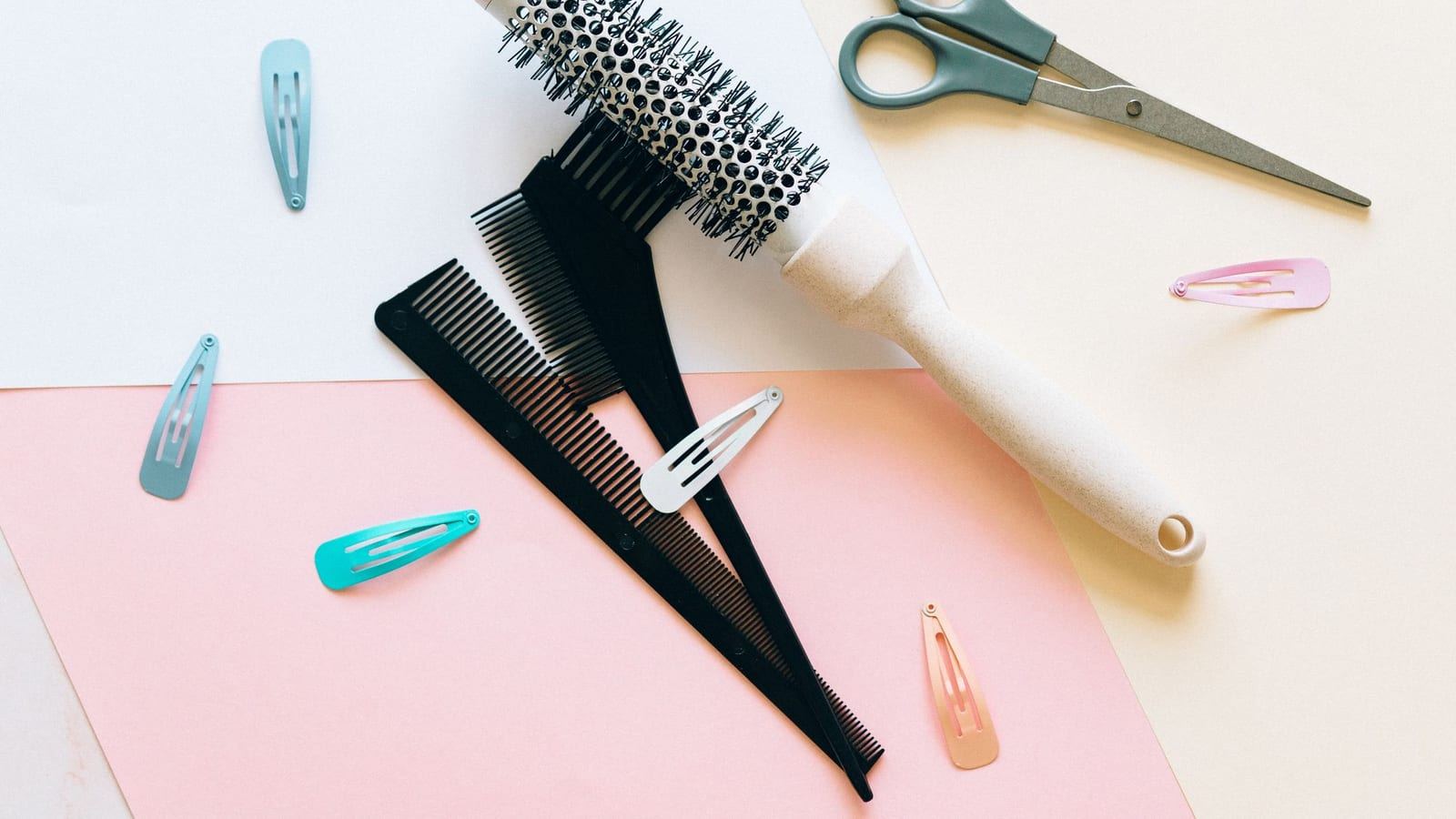
Open your bathroom drawer and you might find three brushes, none of which you chose on purpose. The wrong hair brush can snag fine strands, flatten your roots or leave you with static, while the right one makes brushing quick and gentle. This guide shows which brush matches your hair, what the bristles actually do and how to brush without causing breakage.
Key takeaways
- Match the brush to your hair: soft and closely set for fine hair, mixed bristles for thick hair, flexible bristles for tangles.
- Use a wide-tooth comb or a detangling brush on wet hair, because wet hair is more fragile.
- Always start at the ends and work up. Never drag a brush from the roots through a knot.
- A round brush is for blow-drying, and a paddle brush is for smoothing and everyday use.
- Clean your brush every week or two. A dirty brush puts old oil and product back on clean hair.
Hair Brush Types: What Each One Does
Brushes look alike on the shelf, but each one has a different job. This chart is the quick answer.
| Brush type | Best for which hair | Why use it |
|---|---|---|
| Paddle brush | Medium to long straight hair, dry hair | The wide head covers more hair per stroke, so it smooths and detangles quickly |
| Round brush | Straight to slightly wavy hair, chin-length and longer, during blow-drying | Adds bend, lift and volume as you dry; barrel size sets the curve |
| Boar-bristle brush | Fine to normal straight hair | Soft natural bristles glide gently, smooth the surface and move scalp oil down the strand |
| Boar-and-nylon mix | Medium to thick hair | Nylon pins reach through the hair to detangle, and boar bristles polish the surface |
| Detangling brush | Long, tangle-prone or damp hair | Flexible bristles bend around knots instead of pulling or snapping hair |
| Vented brush | Short to medium hair, quick blow-dries | Open vents let hot air pass through, so hair dries faster |
| Wide-tooth comb | Wet hair of any type, thick or wavy hair | Gentle on wet hair, which is more fragile |
You do not need all seven. Most people do well with a wide-tooth comb, one everyday brush and, if they blow-dry, one round brush.
Which Hair Brush Fits Your Hair Type?
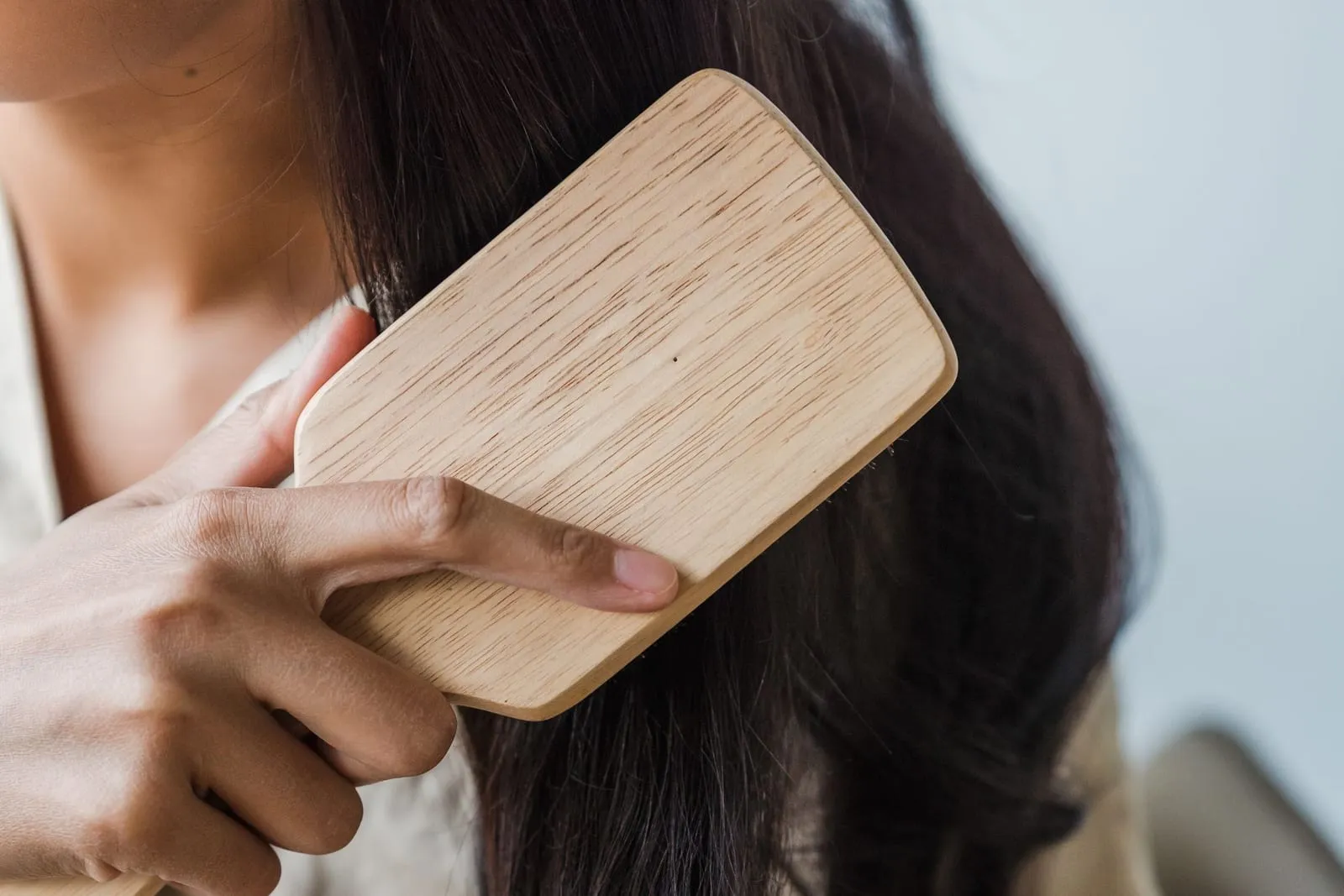
Start with your hair, not the packaging. Fine hair breaks more easily and gets weighed down by harsh tugging, while thick hair needs bristles that can reach through the density.
| Your hair | Reach for | Skip |
|---|---|---|
| Fine, thin, straight | A boar-bristle brush or a soft cushioned paddle brush | Stiff, widely spaced plastic pins |
| Thick or coarse, straight | A boar-and-nylon mix or a large paddle brush | Small, tightly packed brushes that tug |
| Long and tangle-prone | A detangling brush, used from the ends upward | Brushing straight from the roots |
| Wavy | A wide-tooth comb or detangling brush on damp hair | Dry-brushing when waves are set |
| Short hair or bangs | A small round brush or a vented brush | Large barrels that will not reach the roots |
| Color-treated or damaged | Soft bristles and a wide-tooth comb on wet hair | Hard, stiff bristles |
| Sensitive scalp | A brush with soft, rounded tips | Metal pins and sharp bristles |
Curly hair is a special case. It usually does best with fingers or a wide-tooth comb on damp, conditioned hair, as our guide to detangling curly hair explains.
Boar Bristle, Nylon or Mixed?
The bristle material changes how a brush feels on your hair, so it is worth a few minutes.
- Boar bristle is soft and natural. It smooths the surface and moves scalp oil toward the ends, which helps fine, straight hair look polished. It is made from animal hair, so vegans will want an alternative.
- Nylon is firm and durable, and its pins get through thick or tangled hair. Some nylon brushes tend to build static in dry winter air.
- Mixed bristles combine both: nylon pins detangle, and boar bristles smooth. They suit most medium-to-thick hair types.
Did you know?
The comb is one of humankind’s oldest grooming tools. Archaeologists have found combs thousands of years old, which shows how long people have been working out how to manage their hair.
Whichever you choose, check the tips of the bristles. Rounded or ball tips glide over the scalp, and sharp, rough tips can scratch it.
How to Brush Without Causing Breakage
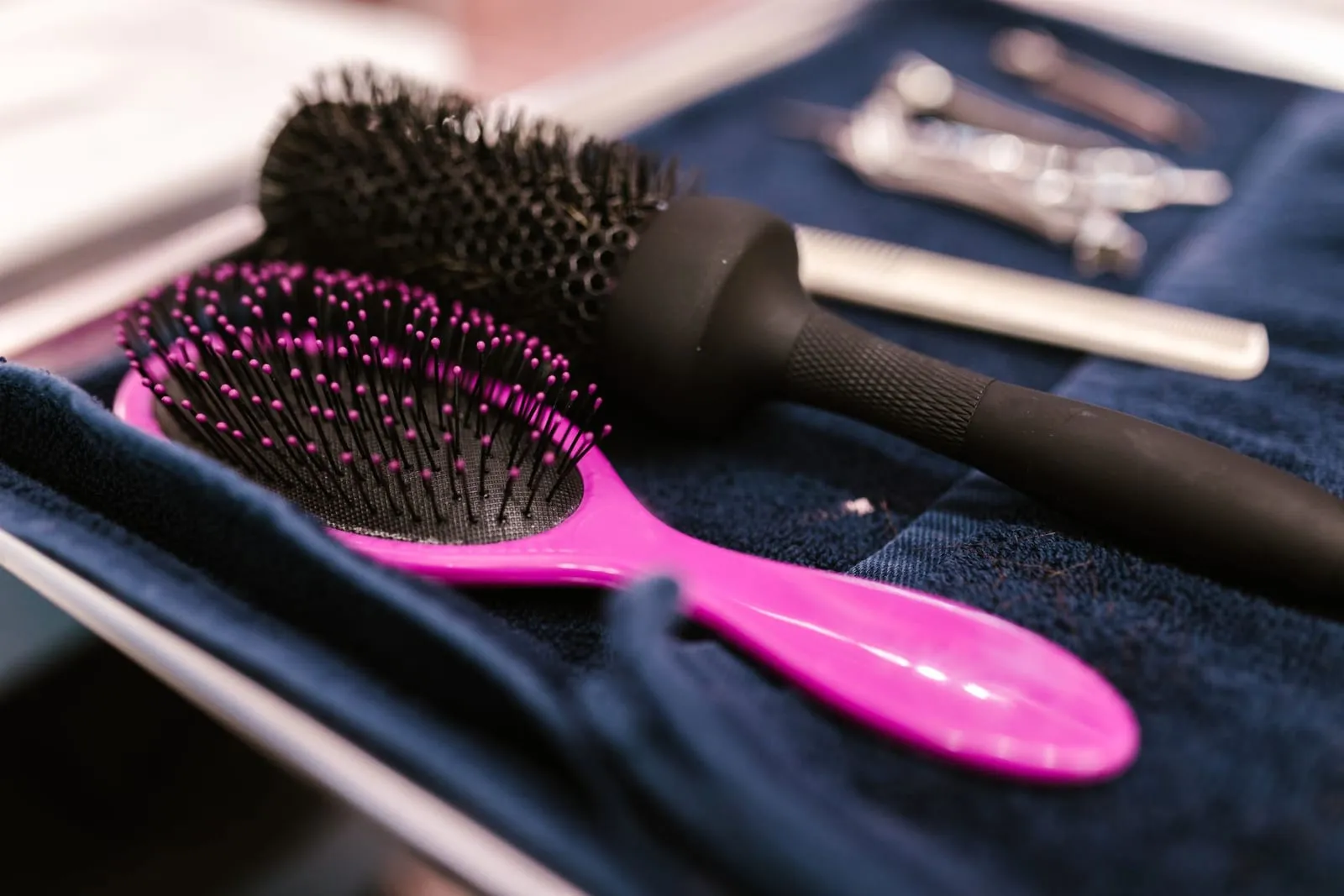
Technique matters as much as the brush. Wet hair stretches more than dry hair and breaks more easily, so be extra gentle when you brush it. These steps work for nearly every straight or wavy hair type.
- Start with dry hair, or use a wide-tooth comb on wet hair. Gently loosen the tangles first.
- Begin at the ends. Brush the last few inches until they glide, then move up a few inches at a time.
- Work in sections. Clip the top layer up and brush the lower layer first.
- Finish with long strokes from the roots to the ends, once the knots are out.
Hold the hair above the knot
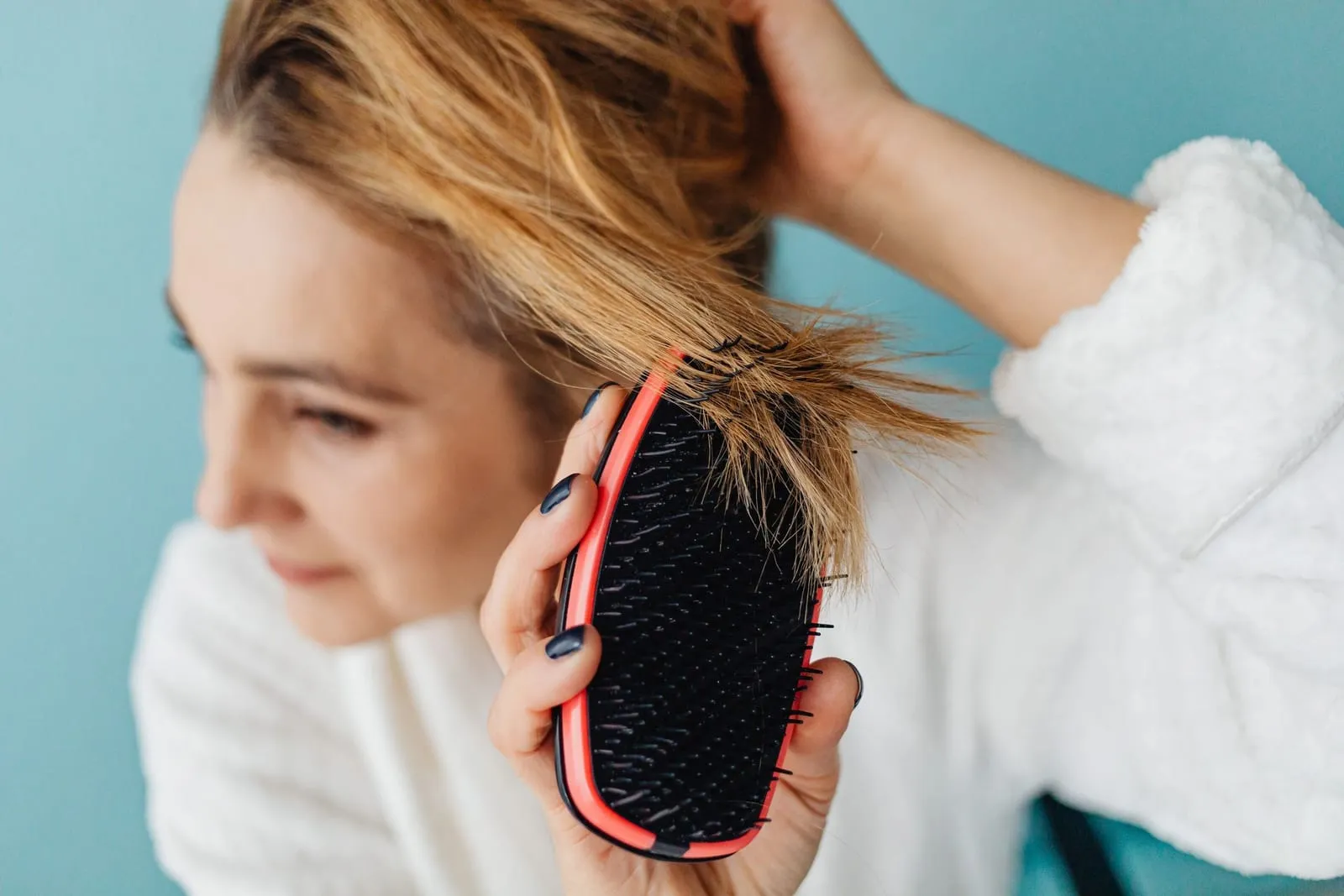
Wrap your free hand around the hair just above the tangle before you brush through it. The hand takes the tension, so the pull never reaches your roots.
Brush as often as you need to detangle or style your hair. The old “100 strokes a day” rule is beauty folklore, and more friction does not give shinier hair.
One more habit helps before you ever pick up the brush.
Brush before you shower
A quick, gentle brush on dry hair before washing loosens knots and shedding strands. That means you are not fighting them when your hair is wet and fragile. For more on the wash itself, see how to wash hair correctly.
Using a Round Brush With a Dryer
A round brush is a styling tool, and it works with heat. Pair it with a heat protectant, pick a barrel that matches your hair length (about 1 to 1.5 inches for short hair, 2 to 3 inches for long hair), and always cool the hair before you release it from the brush. Our step-by-step guide to a blowout at home shows the whole technique.
How to Clean Your Hair Brush
A brush collects hair, dust, skin oils and product residue. Then it spreads them straight back onto clean hair, which can make roots look greasy faster.
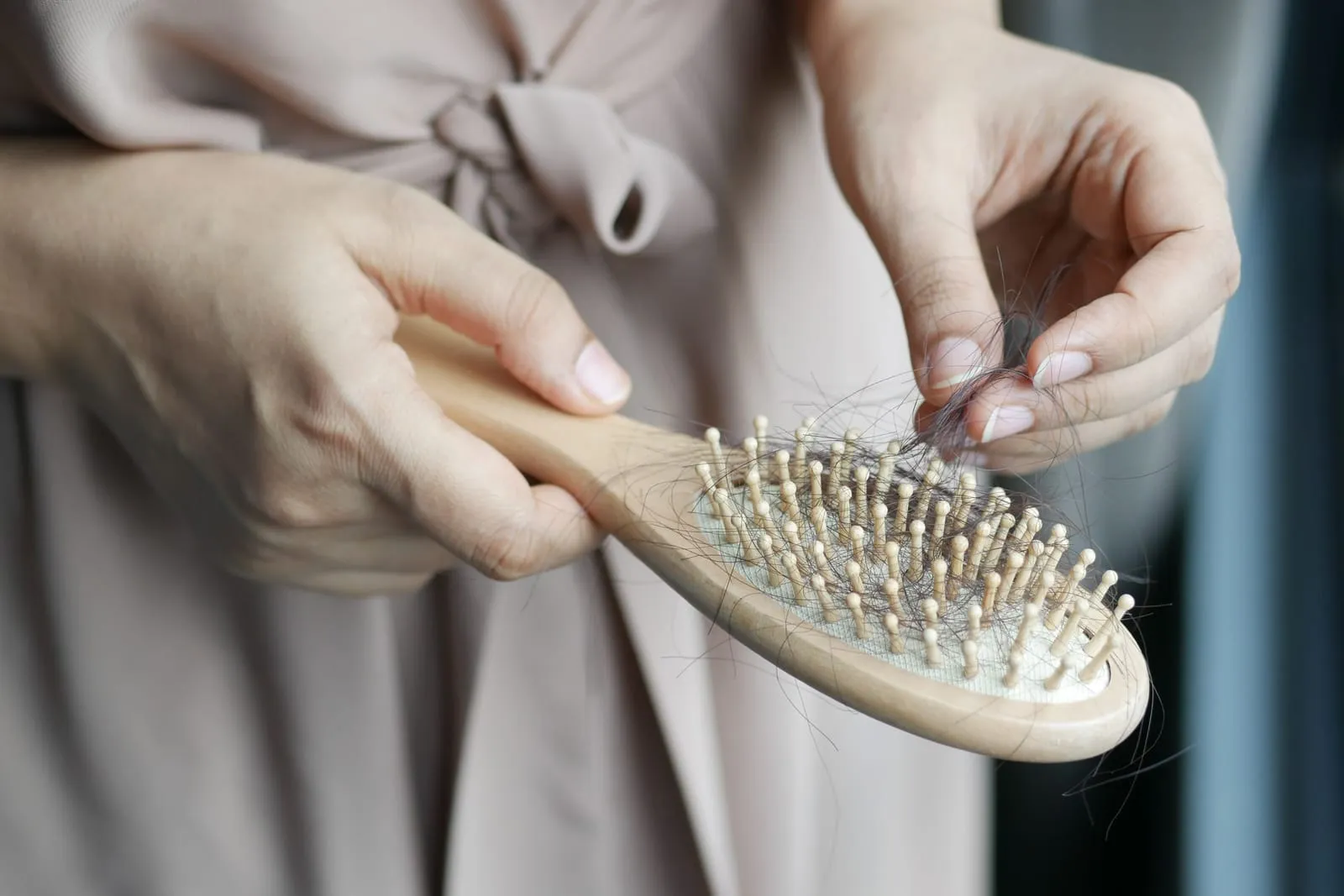
- Remove the hair. Slide the tail of a comb, a pencil or a toothpick under the hair web and lift it out.
- Shake out the dust. Tap the brush bristle-side down.
- Wash it. Swish the bristles in warm water with a drop of shampoo or gentle soap, and use an old toothbrush for stubborn buildup.
- Rinse and dry. Shake off the water and let the brush dry bristle-side down on a towel.
Do not soak wood or cushion brushes
Water can seep into wooden handles and air-cushion pads. For these, wipe the bristles with a damp cloth and a drop of soap instead of soaking the whole brush.
Replace a brush when bristles are bent, loose or missing, or when the cushion cracks.
Did you know?
It is normal to lose 50 to 100 hairs a day, according to the American Academy of Dermatology. So a few strands in your brush are expected. If you notice sudden thinning or bald patches, see a dermatologist.
Hair Brush Myths
| Myth | Fact |
|---|---|
| Brush 100 strokes a day for shiny hair | Brushing detangles and smooths. More strokes just means more friction |
| Never brush wet hair | Wet hair is fragile, but a wide-tooth comb or detangling brush, used gently from the ends, is fine |
| Natural bristles are best for everyone | They suit fine to normal hair, while thick hair often needs nylon pins to get through |
| A pricey brush is always better | Check the bristle flexibility, spacing and tips instead of the price tag |
| One brush works for every job | Smoothing, detangling and blow-drying are different jobs, so they need different tools |
Troubleshooting: If Your Hair Brush Isn’t Working
Your Hair Gets Static
Static is common in dry winter air and with some plastic bristles. Lightly mist the bristles, not your hair, with water, and switch to a wooden or natural-bristle brush. Our frizzy hair fixes include more ways to calm flyaways.
The Brush Snags or Pulls
Start at the ends instead of the roots, and move to a detangling brush or a wide-tooth comb. A brush that pulls on every stroke is the wrong shape for your hair.
Your Roots Look Greasy After Brushing
Brushing spreads scalp oil along the strand, and a dirty brush adds old residue. Wash the brush, and if the oil keeps coming back, see our guide to scalp care.
You See a Lot of Breakage
Short broken hairs in the brush can mean stiff bristles, rough brushing on wet hair or damage from heat. Switch to a gentler brush and read our hair breakage fixes.
Your Next Step
Pull out the brush you use most and compare it with the chart above. If it does not match your hair, swap it for the right type, and give the old one a good clean first. Then put your new brush to work with our blowout at home guide.
Frequently Asked Questions
What is the best hair brush for fine, thin hair?
Can I use the same hair brush on wet and dry hair?
How often should I clean my hair brush?
Are boar bristle brushes worth it?
You might also like
More in Hair Care →
How to Do a Salon-Style Blowout at Home (and Make It Last)
Learn how to do a blowout at home with simple prep, sectioning and round-brush technique, plus tricks that keep it smooth for days. Try it this weekend!

Oily Hair? 12 Ways to Go Longer Between Washes
Oily hair back by day two? Learn why straight, fine hair gets greasy fast and 12 easy ways to stretch time between washes. Try tip one tonight!

How to Use Dry Shampoo the Right Way (Most People Get It Wrong)
Learn how to use dry shampoo so it soaks up oil without white residue, stiffness or buildup. Get the 6-step method, 7 common mistakes and how to pick one.