Nail Shapes Guide: How to Choose the Best Shape for Your Hands
Compare 7 nail shapes, from round to stiletto, by strength, upkeep and hand type, with a quick filing guide for each. Find your best shape today!
In this article
Your nail shape changes how your hands look, how often your nails snag and how long a manicure survives. Most people pick a shape from a saved pin, then wonder why it chips in a week. Use this nail shapes guide to match a shape to your nail bed, your daily life and your skill with a file. Then follow the quick filing steps for each one.
Key takeaways
- Short round, squoval and oval are the sturdiest everyday shapes. Long and pointed ones break more easily.
- You can only file into the length you have, so your free edge decides which shapes are possible.
- Echo the curve of your cuticle as a starting point, then let your lifestyle overrule it.
- File in one direction, with a fine file, and never cut your cuticles.
- Nails that hurt, lift or change color need a dermatologist or doctor, not a new shape.
Nail Shapes at a Glance: Strength and Upkeep
Skim this table first, then read the steps for the shapes that catch your eye. Strength here means how well the shape tends to hold up to daily use.
| Shape | Best for | Strength | Upkeep |
|---|---|---|---|
| Round | Short nails, narrow nail beds, active hands | High | Low. Re-curve the tip weekly |
| Square | Long, narrow nail beds | Medium | Medium. Corners snag, so soften them often |
| Squoval | Almost everyone, especially first-timers | High | Low. Touch up the corners weekly |
| Oval | Wide or short nail beds | Medium to high | Low to medium |
| Almond | Medium length, slim fingers | Medium | Medium. Needs even, tapered sides |
| Coffin / ballerina | Long nails, wide nail beds | Low to medium | High. Usually needs extensions |
| Stiletto | Long nails, special occasions | Low | High. Thin tip, usually extensions |
Not sure where to start? Squoval is the safest first try, and round is the best choice if you type or work with your hands all day.
Did you know?
A razor-sharp square is not the strongest tip. The American Academy of Dermatology (AAD) advises cutting fingernails almost straight across, then rounding the corners slightly for strength. That is exactly what a squoval shape does.
How to Choose Nail Shapes for Your Hands
Three things decide whether a shape works for you: your nail bed (the pink part), your finger length and what your hands do all day. A pretty shape that breaks every Tuesday is not a good fit.
Find your nail bed type in 30 seconds. Look at the pink part of each nail from above:
- Wider than it is tall: a short or wide nail bed.
- Taller than it is wide: a long, narrow nail bed.
- About equal: an average nail bed, and almost any shape works.
Then use this “if X, then Y” chart as a starting point, not a rule.
| If… | Try | Why |
|---|---|---|
| Your nail bed is short or wide | Oval or almond | A narrowed, curved tip tends to look longer |
| Your nail bed is long and narrow | Square, squoval or round | A fuller tip balances the width |
| Your cuticle line is curved | Round or oval | The tip echoes the curve at the base |
| Your cuticle line is flat | Square or squoval | The tip echoes the flat base |
| You type, clean or lift all day | Short round or squoval | Fewer corners to catch |
Your daily routine can overrule the chart:
- Typing or texting all day: short round or squoval, so tips do not catch on keys.
- Cooking, cleaning or gardening: short and rounded, plus gloves for wet jobs.
- Dressing up for an event: almond, coffin or stiletto, ideally on extensions applied by a professional.
Did you know?
Fingernails grow only about 3 mm a month, so a shape you file too short takes weeks to recover. Filing slowly and stopping early is the safest way to experiment.
The 7 Nail Shapes: How to File Each One
Start every shape the same way. Wash and dry your hands, trim the length with clippers by cutting almost straight across, and leave the cuticles alone. Then use a fine file (around 180 to 240 grit) and stroke in one direction only, as the American Academy of Dermatology recommends.
1. Round
The tip follows the curve of your fingertip, with straight sides and no flat spot. It is strong, simple and ideal for short nails.
- Trim to an even length and file the tip straight across first.
- Sweep each corner toward the center in a gentle arc.
- Stop when the free edge mirrors the curve of your fingertip.
2. Square
A flat tip, straight side walls and crisp 90-degree corners. It looks sharp, but the corners snag easily.
- Hold the file level with the nail and stroke from one side toward the center.
- Repeat from the other side, so the tip stays straight.
- Keep the side walls straight and check that both corners match.
3. Squoval
A square tip with softened corners, which makes it the sturdiest of the squared shapes.
- Shape the tip flat, as you would for a square.
- Make two or three light strokes at each corner to round it off.
- Leave the center of the tip flat.
4. Oval
The sides taper gently inward, and the tip forms one full curve like an egg.
- Angle the file slightly under the nail and round the tip into one smooth arc.
- Narrow the side walls a little as they approach the tip.
- Compare both sides of every nail, because oval shows lopsided filing quickly.
5. Almond
Narrower at the tip than at the base, with a softly rounded point like an almond nut.
- File both side walls gently inward toward the center.
- Round the point slightly, so it is not sharp.
- Do not thin the sides too much, because that removes support.
6. Coffin or Ballerina
These two names describe one shape: tapered sides leading to a narrower, flat tip. It needs real length, so on natural nails it often means growing out first or using extensions.
- Taper both side walls in straight lines toward the tip.
- Square off the narrower tip.
- Soften the two corners with a stroke or two.
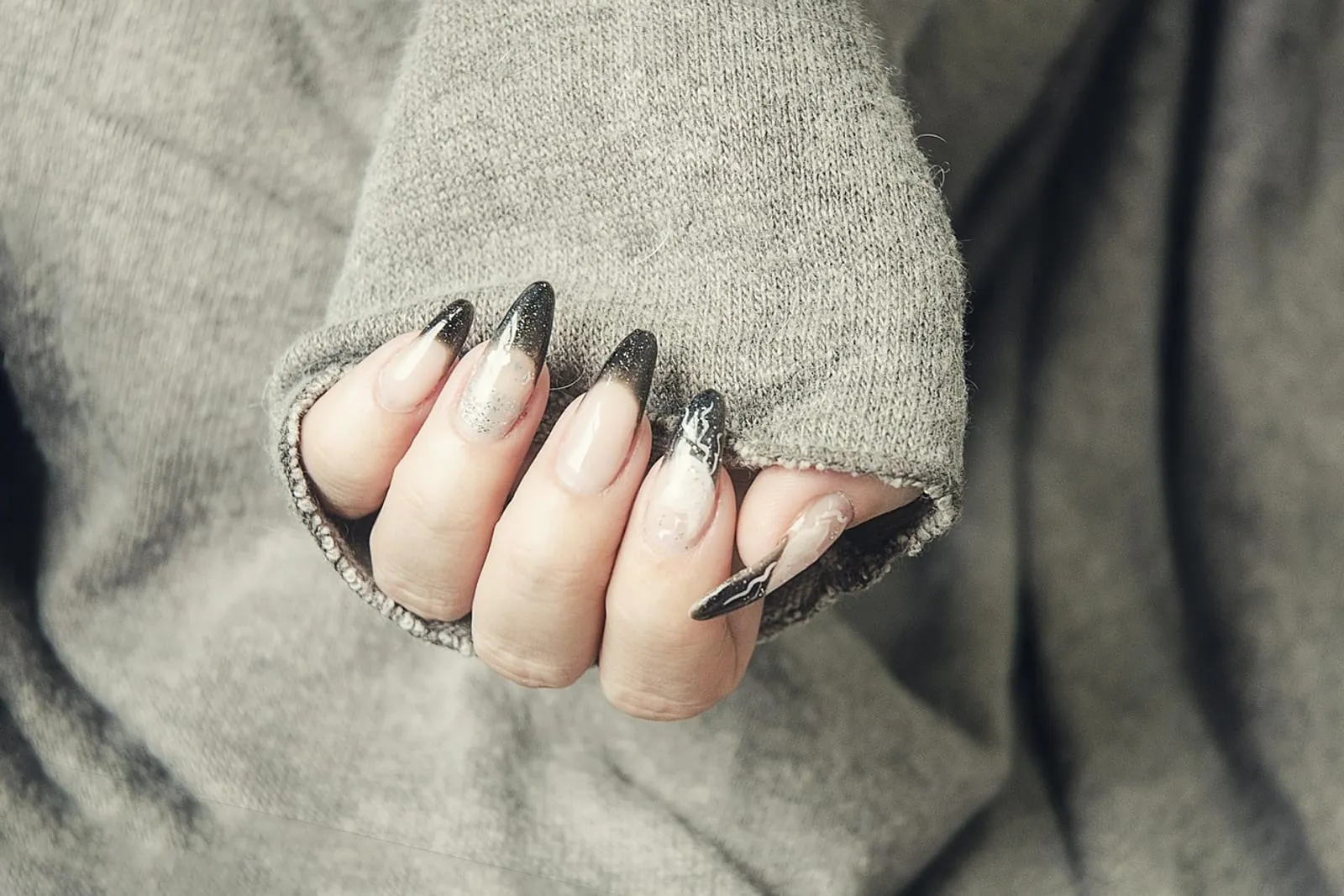
7. Stiletto
Long, slim and pointed. The sharp tip has very little nail behind it, so it is the least durable shape and usually relies on extensions.
- Taper both side walls evenly into a point at the center.
- Keep the point slightly rounded instead of needle-sharp.
- Skip heavy-duty tasks while you wear them.
Finish every shape the same way. Run a fingertip along each edge and smooth any rough spot with one or two light strokes. Then brush off the filing dust and rub a drop of cuticle oil into the skin around each nail.
The straight-edge check
Lay the straight edge of a credit card or ruler along a filed tip. If you see a gap of light, the tip is uneven. This works for square, squoval and coffin, which need a flat edge.
Myth vs. Fact: Shape and Strength
| Myth | Fact |
|---|---|
| Pointed nails are no more likely to break. | Long, tapered tips have less nail behind them and more leverage, so they are more likely to snap. |
| File the sides deep for slimmer nails. | Deep side filing removes support and weakens the nail. File the free edge instead. |
| Clippers alone are enough to shape nails. | Clippers set the length, but a file smooths the edge and rounds the corners. |
| Your nail bed dictates your shape. | Nail bed charts are a starting point. Your daily routine matters more. |
Shaping Safely at Home
Safe shaping rules
Never cut or push back your cuticles, even if you can see a hangnail. Do not peel gel polish or acrylic off to change shape. Soak it off or ask a professional. Open a window when you use acetone, and patch-test any new nail product on your forearm for 24 hours.
If your nails hurt, lift, thicken or change color, see a dermatologist or doctor before you reshape them. If you wear gel, our guide to removing gel polish at home shows the safe soak-off steps.
To keep a shape neat between sessions, re-file lightly once a week, moisturize your nails and cuticles every night, and wear gloves for wet chores. Our manicure at home guide walks through the full routine.
Troubleshooting: If Your New Shape Isn’t Working
The Corners Keep Snagging
Soften them with a few light strokes, or switch to squoval. Sharp corners are the first part to catch.
The Tips Look Uneven
Shape one nail at a time, then compare it with its neighbors. File from the sides toward the center, and stop as soon as both sides match.
The photo check
Snap a photo of your hand with the fingers together, then zoom in. Crooked corners and tilted tips show up far more clearly in a picture than they do by eye.
The Nails Split After Filing
Back-and-forth sawing or a coarse file are the usual culprits. Use a fine file in one direction and moisturize your hands and cuticles each night.
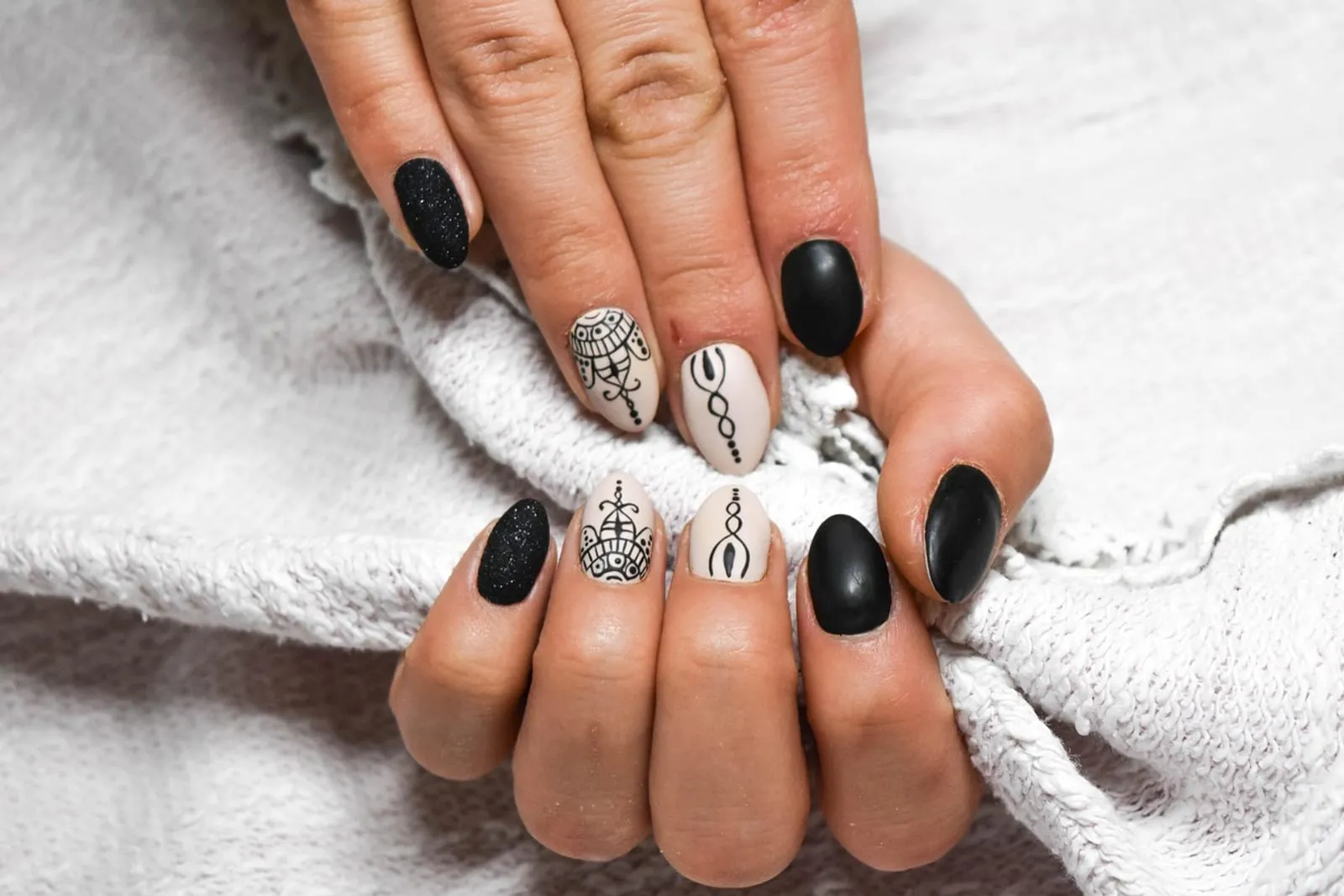
Your Nails Are Too Short for the Shape
Choose round or squoval now and wait. Fingernails grow about 3 mm a month, so reaching a longer shape can take a few months. Our grow nails longer guide covers the habits that protect your length.
Your Next Step
Pick one shape from the table, file just one hand tonight, and live with it for a week before you commit. For a way to keep that shape from breaking, read our guide to growing nails longer and stronger. Once the shape is settled, pick a color from our winter nail ideas, or browse the Nails category for more.
Frequently Asked Questions
What is the strongest nail shape?
What is the difference between square and squoval nails?
Which nail shape makes fingers look longer?
Can I file my natural nails into any shape?
You might also like
More in Nails →
Short Nail Designs: 20 Easy Ideas for Everyday Wear
Browse 20 short nail designs, from sheer neutrals and bold color to dot art and negative space, with easy steps and a quick-pick table. Save your favorites!
French Tip Nails: 15 Modern Twists on the Classic
Try 15 modern French tip nails, from micro and colored tips to double, V and wavy lines, plus how to draw a straight tip at home. Save your favorite twist!
How to Grow Nails Longer and Stronger: 10 Habits That Work
Grow nails longer by cutting breakage, not chasing speed. Try 10 habits: short shape, one-way filing, cuticle oil and gloves, plus a biotin myth check.